Your home’s foundation serves as the literal bedrock of structural safety, property value, and family well-being. When foundation issues emerge, swift and effective action becomes paramount to prevent escalating damage and potential catastrophe. Cement foundation repair represents a critical investment in protecting your home’s structural integrity and ensuring long-term stability. Understanding why cement foundation repair demands immediate attention helps homeowners make informed decisions that safeguard their property and loved ones. This comprehensive guide explores the vital importance of professional foundation work and why delaying necessary repairs puts your home at serious risk.
Understanding Cement Foundations and Common Problems
Cement foundations, commonly constructed from reinforced concrete, form the structural base supporting residential and commercial buildings. These foundations bear tremendous loads while resisting environmental forces like soil movement, water pressure, and temperature fluctuations. According to the U.S. Department of Housing and Urban Development, cement foundations naturally develop minor imperfections, but significant deterioration requiring cement foundation repair poses serious structural threats.
Common Cement Foundation Problems
Cracking from soil settlement or expansion – Soil beneath foundations shifts due to moisture changes, causing foundations to crack and settle unevenly. These cracks often necessitate professional intervention to prevent structural failure. For more information about crack repair techniques, read our article on Epoxy Foundation Crack Repair.
Water infiltration and moisture damage – Poor drainage allows water to penetrate cement foundations, leading to deterioration, mold growth, and progressive weakening requiring immediate attention.
Structural overloading – Foundations designed for specific loads may fail when exceeded, creating cracks and settlement that demand expert intervention.
Poor initial construction quality – Substandard materials or improper installation create vulnerabilities that manifest as foundation problems requiring corrective action. To understand comprehensive structural issues beyond just foundations, explore our guide on Home Structure Repair.
Warning Signs You Need Cement Foundation Repair
Recognizing early warning signs enables homeowners to address problems before they escalate into major structural failures. These indicators signal the need for professional cement foundation repair evaluation:
Interior Warning Signs
Cracks in walls, ceilings, or floors – Horizontal, vertical, or stair-step cracks wider than 1/4 inch indicate foundation movement requiring professional attention. Expanding cracks signal active deterioration demanding immediate action.
Doors and windows sticking or not closing properly – Foundation settlement causes frames to shift, preventing doors and windows from operating smoothly. This common symptom often accompanies the need for expert evaluation.
Uneven or sloping floors – Noticeable floor slopes or areas where objects roll indicate foundation settlement. Professional contractors can restore level floors and prevent further settling.
Separation between walls and ceilings/floors – Visible gaps where walls meet ceilings or floors demonstrate significant foundation movement necessitating comprehensive intervention.
Exterior Warning Signs
Exterior wall cracks – Cracks in brick, stucco, or siding mirror interior foundation problems and indicate the need for professional evaluation.
Foundation cracks visible from outside – Direct observation of foundation cracks signals deterioration requiring professional assessment and potential corrective work.
Water pooling near foundation – Poor drainage creating standing water accelerates foundation deterioration, often necessitating both drainage correction and structural repairs.
The Dangers of Delaying Cement Foundation Repair
Postponing necessary cement foundation repair creates a cascade of increasingly severe consequences that threaten safety, finances, and property value:
Escalating Structural Damage
Foundation problems never self-correct—they invariably worsen. Minor cracks expand, small settlements become major sags, and localized issues spread throughout structures. What might cost $5,000 in early-stage cement foundation repair can escalate to $50,000 or more when delayed until comprehensive failure occurs. For homeowners in Missouri City facing foundation challenges, professional foundation repair Missouri City services provide expert evaluation and timely intervention preventing cost escalation.
Safety Risks to Occupants
Compromised foundations create genuine safety hazards. Severe foundation failure can cause partial structural collapse, creating life-threatening situations. Even without collapse, foundation problems create trip hazards from uneven floors and potential injury from falling debris. Timely professional intervention protects occupant safety by maintaining structural integrity.
Property Value Deterioration
Homes with documented foundation problems experience immediate value reduction of 10-20% or more. Many buyers avoid properties with foundation issues entirely, limiting your potential buyer pool. However, completed repairs with proper documentation and warranties can restore full market value, making timely action financially prudent. For commercial properties facing similar challenges, learn more about Commercial Foundation Repair solutions.
Types of Cement Foundation Repair Methods
Professional cement foundation repair employs various proven techniques, each suited to specific foundation problems. The American Concrete Institute provides technical guidelines for cement foundation repair methodologies ensuring work meets engineering standards:
Crack Repair and Sealing
For non-structural cracks, epoxy or polyurethane injection provides effective solutions. These materials bond with concrete, seal cracks against water infiltration, and restore structural continuity. This approach works best for stable foundations with isolated cracking.
Slab Jacking and Foundation Leveling
When foundations settle unevenly, slab jacking (mudjacking) or polyurethane foam injection lifts settled sections back to proper elevation. This technique involves pumping material beneath slabs to raise them, restoring level surfaces and proper support. For detailed information about modern foam injection methods, read our comprehensive article on Polyurethane Foundation Repair.
Underpinning and Pier Systems
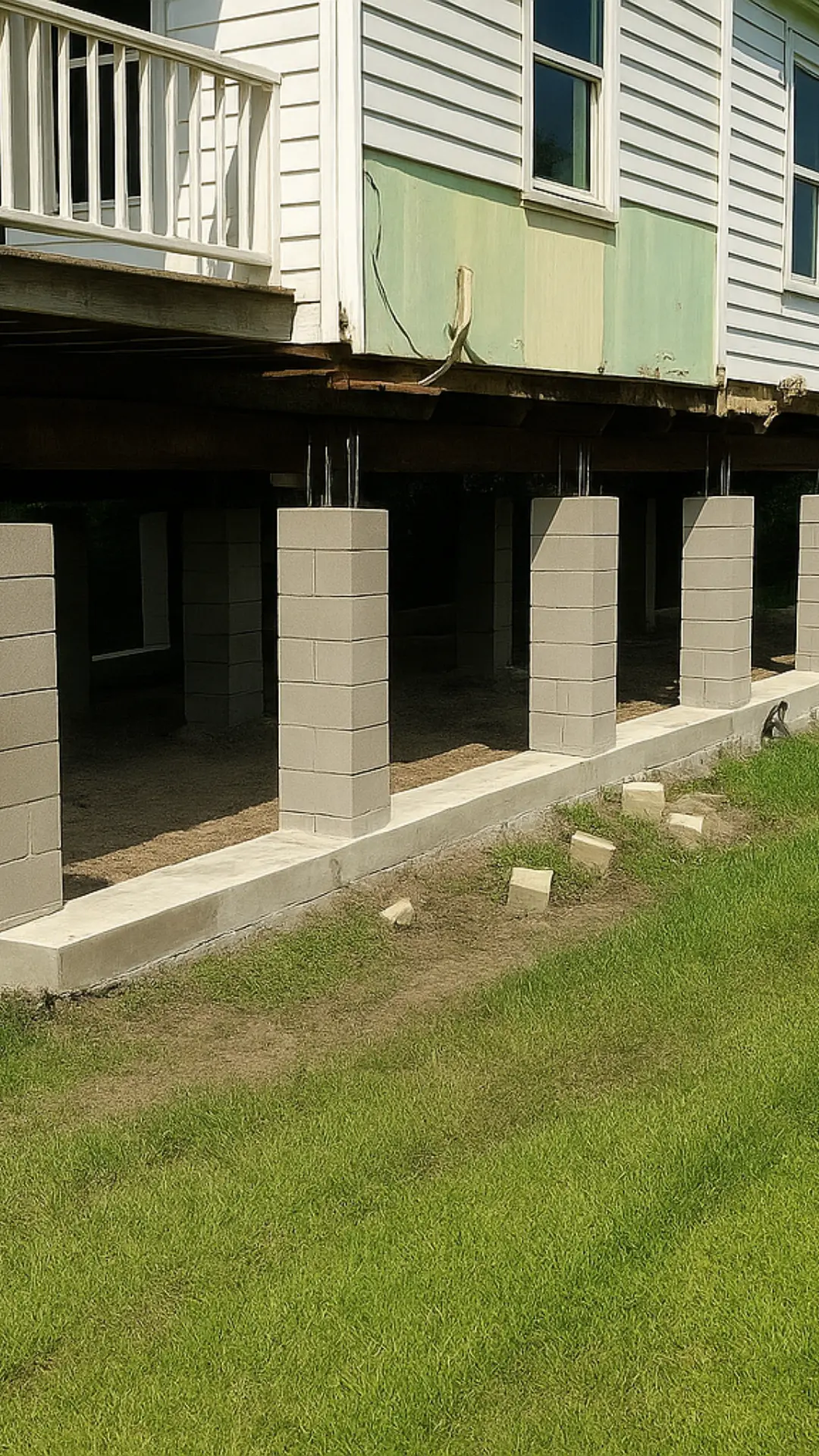
Severe foundation settlement or unstable soil conditions require underpinning—the most comprehensive form of structural correction. Steel piers or helical piles extend deep into stable soil strata, transferring foundation loads past problematic surface soils. This permanent solution prevents future settlement. Properties with crawl spaces may benefit from specialized pier and beam foundation repair Missouri City services addressing both foundation and structural support issues simultaneously.
Drainage Solutions
Effective foundation work always addresses water management. Installing French drains, improving grading, adding gutters and downspouts, or waterproofing foundation walls prevents moisture problems that undermine stability. Without proper drainage, even excellent structural repairs eventually fail.
The Professional Cement Foundation Repair Process
Professional cement foundation repair follows a systematic approach ensuring problems are properly diagnosed and effectively resolved. The International Code Council establishes building codes that govern cement foundation repair work, ensuring repairs meet safety and structural standards:
Comprehensive Foundation Inspection
Every project begins with thorough inspection by qualified professionals. Contractors examine crack patterns, measure settlement amounts, assess soil conditions, and identify underlying causes. This inspection determines appropriate repair methods and provides documentation for permits and insurance claims.
Diagnosis and Repair Planning
Based on inspection findings, contractors develop detailed plans specifying methods, materials, timeline, and costs. Structural engineers may provide calculations and specifications for complex repairs ensuring they meet load requirements and building codes.
Repair Implementation
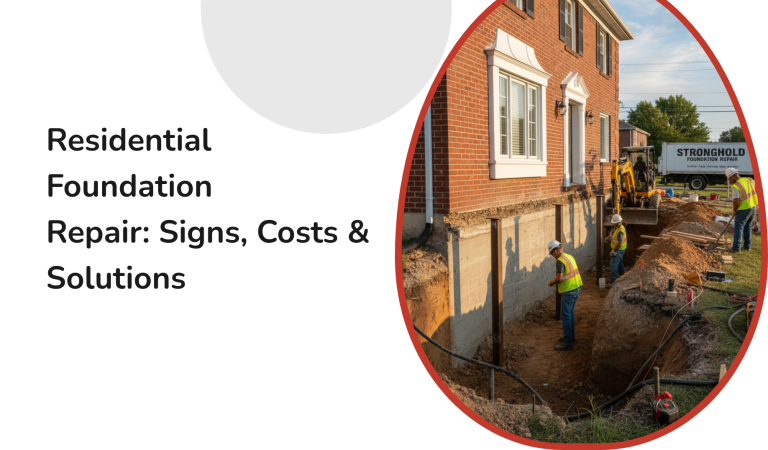
During implementation, contractors follow established procedures for chosen repair methods. Work may include excavation, pier installation, crack injection, slab lifting, or drainage system construction. Professional contractors coordinate work to minimize disruption while ensuring quality results.
Quality Verification and Monitoring
After completing repairs, contractors verify work quality through measurement, testing, and inspection. Elevation surveys confirm foundations are level, load tests verify structural capacity, and visual inspection ensures proper completion. This documentation provides owners with repair verification and baseline data for future monitoring.
Cost Factors for Cement Foundation Repair
Understanding what influences cement foundation repair costs helps homeowners budget appropriately:
Severity and extent of damage – Minor crack repair may cost $500-$2,000, while comprehensive underpinning can reach $10,000-$30,000 or more.
Foundation type and size – Larger foundations or complex designs increase cement foundation repair costs due to greater material and labor requirements.
Repair method selected – Simple crack sealing costs less than pier installation, but may not provide adequate long-term stability.
Accessibility and site conditions – Difficult access or poor soil conditions increase cement foundation repair complexity and costs.
Property owners should view professional foundation work as essential investment protecting home value and safety. For those requiring foundation leveling, professional house leveling service Missouri City providers offer expertise ensuring precise, lasting results.
Choosing a Qualified Cement Foundation Repair Contractor
Selecting qualified professionals for cement foundation repair is crucial for successful outcomes:
- Verify proper state licensing and insurance coverage
- Confirm experience specifically with foundation repairs
- Review references from recent similar projects
- Ensure contractors provide detailed written estimates
- Check warranty terms covering both materials and workmanship
Preventing Future Foundation Problems
After investing in cement foundation repair, protecting your foundation from future problems makes economic sense:
- Maintain consistent soil moisture through proper irrigation
- Ensure gutters and downspouts direct water away from foundations
- Maintain proper grading sloping away from structures
- Address plumbing leaks promptly to prevent soil saturation
- Schedule annual foundation inspections to catch problems early
Conclusion: Protecting Your Home Through Timely Cement Foundation Repair
Cement foundation repair represents one of the most critical investments homeowners can make in property safety, stability, and value. Foundation problems never improve without professional intervention—they invariably worsen, often dramatically and dangerously. Understanding why cement foundation repair matters and recognizing warning signs enables homeowners to act before minor issues become major catastrophes.
Whether facing minor cracks or significant settlement, professional cement foundation repair provides lasting solutions that protect structural integrity, maintain property value, and ensure occupant safety. Don’t ignore foundation warning signs or delay necessary cement foundation repair. Contact qualified cement foundation repair professionals who can evaluate your situation, recommend appropriate solutions, and execute cement foundation repair that provides decades of reliable service. Your home’s foundation literally supports everything else—protect it with professional care that guarantees stability and safety for years to come.
FAQs (Frequently Asked Questions)
1. How do you repair a concrete foundation?
Repairing a concrete foundation typically involves a multi-step process. First, a professional will inspect the foundation to identify the cause of damage. Common repairs include filling cracks, injecting polyurethane foam, or using concrete patches. For more extensive damage, such as uneven settlement, solutions like slab jacking, piering, or underpinning may be required. The specific method depends on the type of damage and the overall condition of the foundation.
2. What is the best cement mix for foundation repair?
The best cement mix for foundation repair typically involves a high-strength concrete mix. It is commonly recommended to use a mix that includes Portland cement, sand, and aggregate. A mix with a ratio of 1 part cement, 2 parts sand, and 3 parts aggregate (C25 or C30) provides strength and durability for most foundation repairs.
3. Can new concrete bond to old concrete?
Yes, new concrete can bond to old concrete, but the key is to ensure proper surface preparation. For the best adhesion, the existing concrete should be clean, free of contaminants like oil, and slightly roughened to provide a better bonding surface. Bonding agents or adhesives, like bonding slurry, can also be applied to improve the bond between the two layers.
4. What is considered major foundation repair?
Major foundation repair involves significant structural issues that impact the stability and safety of the home. This may include large cracks in the foundation, uneven floors, sagging walls, or significant settling. Major repairs often require complex solutions, such as piering, underpinning, or foundation lifting, to stabilize the foundation and prevent further movement.
5. Is it cheaper to replace or repair concrete?
In most cases, repairing concrete is more cost-effective than replacing it. Foundation repair methods like crack filling, slab jacking, or polyurethane injections are much cheaper than completely replacing a foundation. Replacement is generally only necessary when the foundation is beyond repair due to severe cracking or shifting.
6. What is the best bonding agent for old concrete?
The best bonding agent for old concrete is a high-quality bonding adhesive or slurry. Products like Quikrete Concrete Bonding Adhesive or SikaLatex are widely used to bond new concrete to old surfaces. These products create a strong bond between the old and new concrete, ensuring durability and longevity in repairs.
7. What is considered foundation repair?
Foundation repair refers to any method used to correct issues with the structural integrity of a foundation. This includes filling cracks, leveling uneven floors, stabilizing a sinking foundation, and addressing soil or moisture-related problems. Common repair techniques include slab jacking, underpinning, and the installation of piers to restore the foundation’s stability.