Flooding threatens millions of homes annually, causing devastating damage and displacing families. For properties in flood-prone areas, house lifting represents one of the most effective long-term solutions, permanently elevating structures above flood levels while simultaneously addressing foundation problems. House lifting involves physically raising entire homes to new elevations, creating space for new or improved foundations while protecting against water damage. This comprehensive process combines engineering expertise, specialized equipment, and construction skills to transform vulnerable properties into flood-resistant structures. Whether motivated by flood insurance requirements, foundation repair needs, or proactive flood protection, understanding house lifting proves essential for homeowners considering this significant investment in property protection and value enhancement.
What Is House Lifting and Why It’s Necessary
House lifting constitutes the process of separating a structure from its existing foundation, elevating it using hydraulic jacking systems, and either constructing a new higher foundation or extending the existing one. This engineering-intensive procedure enables homes to reach elevations meeting flood protection requirements or addressing severe foundation deterioration.
Primary Reasons for House Lifting
Flood protection ranks as the most common motivation for house lifting. Properties in designated flood zones face mandatory elevation requirements for flood insurance coverage. According to FEMA (Federal Emergency Management Agency), elevating homes above Base Flood Elevation (BFE) dramatically reduces flood risk and qualifies property owners for substantial insurance premium reductions.
Foundation repair often necessitates house lifting when existing foundations experience severe deterioration, settlement, or structural failure beyond conventional repair capacity. Lifting enables complete foundation replacement or comprehensive repair work impossible with structures in place. Property owners in Cypress experiencing foundation challenges can access professional foundation repair Cypress services providing expert assessment determining whether lifting becomes necessary.
Code compliance requirements frequently mandate elevation for properties in special flood hazard areas. Building codes and local ordinances specify minimum elevation standards protecting occupants and reducing community flood vulnerability. Understanding when foundation issues require lifting versus conventional repairs helps homeowners make informed decisions—learn more in our comprehensive article on House Leveling Service.
Benefits of House Lifting
Professional house lifting delivers multiple advantages extending beyond basic flood protection:
Comprehensive Flood Protection
Elevating homes above flood levels provides permanent protection against rising water, eliminating the most devastating source of residential property damage. House lifting removes structures from harm’s way rather than attempting to resist floodwaters, offering far superior protection compared to temporary barriers or waterproofing measures. Properties elevated to or above Base Flood Elevation plus freeboard effectively eliminate flood risk for most storm scenarios.
Foundation Repair and Replacement Opportunities
The house lifting process creates ideal conditions for addressing foundation problems. With houses elevated, contractors can replace deteriorated foundations, repair extensive structural damage, or upgrade foundation systems without the constraints of working beneath occupied structures. This proves particularly valuable for homes with crawl space foundations requiring conversion to elevated pier systems. According to the American Society of Civil Engineers, combining house lifting with foundation improvements delivers optimal long-term structural performance.
Dramatic Flood Insurance Savings
Elevated homes qualify for substantially reduced flood insurance premiums through the National Flood Insurance Program. Properties meeting or exceeding elevation requirements can achieve premium reductions of 30-60% or more, with savings accumulating over years to offset lifting costs. Some homeowners recover their investment within 10-15 years through insurance savings alone, making house lifting financially viable even before considering flood damage prevention.
Increased Property Value and Marketability
Elevated homes command premium prices in flood-prone markets where buyers recognize the value of flood protection and reduced insurance costs. House lifting transforms previously high-risk properties into desirable assets, expanding buyer pools and accelerating sales. The enhanced protection and lower ongoing costs make lifted homes significantly more attractive to potential purchasers.
The House Lifting Process: Step by Step
Professional house lifting follows systematic procedures ensuring safety and structural integrity throughout the project:
Pre-Lift Inspection and Engineering Assessment
Every house lifting project commences with comprehensive structural evaluation. Licensed engineers examine foundation conditions, assess structural integrity, identify potential complications, and develop lifting plans. This assessment determines whether structures can safely withstand lifting stresses and identifies required reinforcement. Detailed surveys establish current elevations and calculate required lift heights meeting flood protection or building code requirements.
Permit Acquisition and Regulatory Compliance
Building permits, engineering approvals, and environmental clearances precede house lifting work. Municipalities require detailed plans, engineering certifications, and proof of adequate insurance before authorizing projects. This regulatory process protects homeowners, contractors, and communities while ensuring work meets established safety standards.
Foundation Preparation and Utility Disconnection
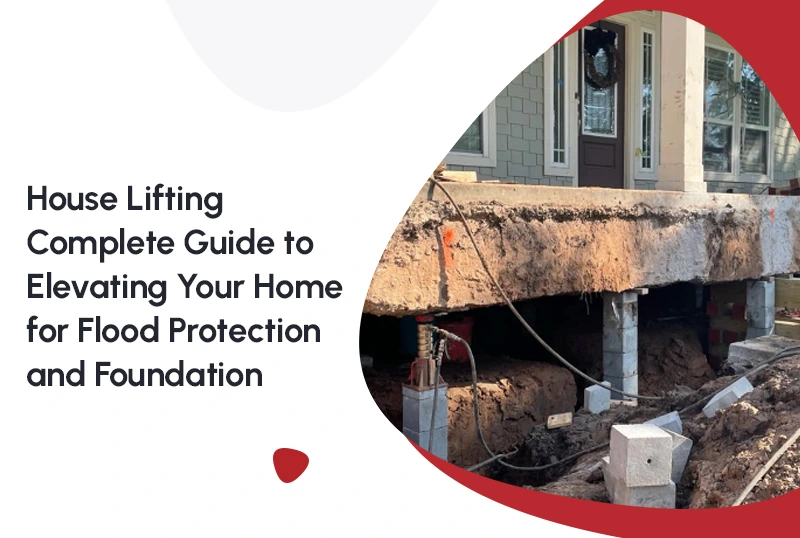
Contractors disconnect utilities including water, sewer, gas, and electrical services before lifting. Foundation preparation involves installing steel support beams beneath structures, creating unified lifting platforms distributing loads across multiple hydraulic jacks. This preparation phase proves critical for house lifting success, establishing stable support systems preventing structural damage during elevation. Properties with specialized foundation systems benefit from professional pier and beam foundation repair Cypress services ensuring proper preparation.
Hydraulic Lifting Execution
Synchronized hydraulic jacks positioned at strategic locations lift structures incrementally, typically advancing 1-2 inches per cycle. Unified hydraulic systems ensure even lifting across all support points, preventing structural stress or distortion. The house lifting process proceeds gradually over days or weeks, allowing continuous monitoring and adjustment maintaining structural alignment. Experienced crews monitor building stress indicators throughout lifting, halting operations if complications arise.
New Foundation Construction
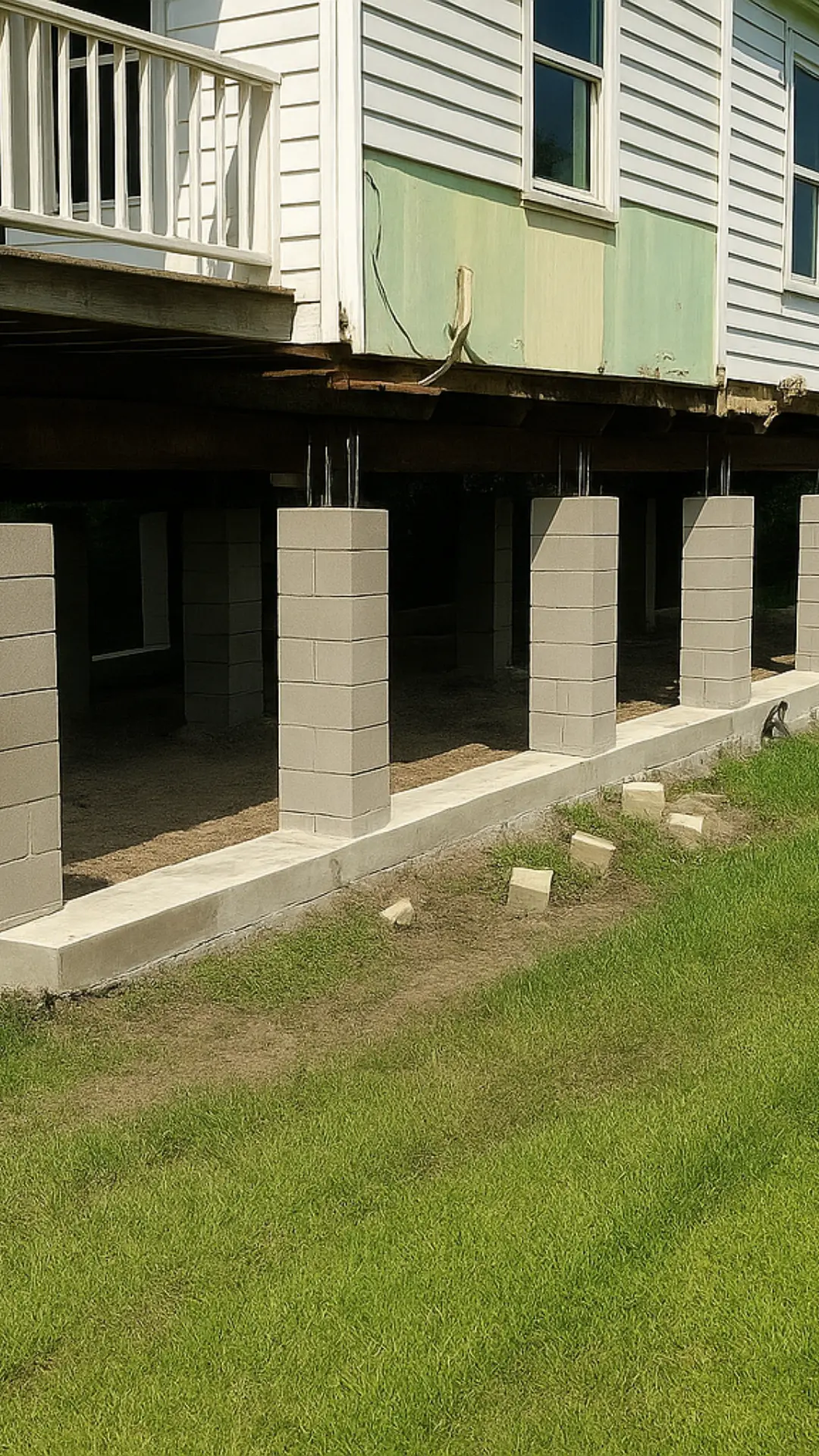
With structures elevated to target heights, contractors construct new foundations or extend existing ones. Foundation design depends on elevation requirements, soil conditions, and structural loads. Options include elevated pier and beam systems, new crawl space foundations, or extended basement walls. This phase provides opportunities addressing previous foundation deficiencies while meeting current building codes. Understanding foundation crack issues helps homeowners appreciate proper foundation construction importance—read our detailed article on Concrete Foundation Crack Repair.
House Lowering and System Reconnection
Once new foundations cure adequately, contractors gradually lower houses onto new supports, secure structures to foundations, and reconnect utilities. Final inspections verify work meets building codes and engineering specifications. The completed house lifting project delivers elevated structures with improved foundations ready for safe occupancy.
Types of House Lifting Methods
Different house lifting techniques suit various structural types and project requirements:
Unified Hydraulic Jacking Systems
Modern house lifting predominantly employs unified hydraulic systems connecting multiple jacks to central control units. These sophisticated systems ensure perfectly synchronized lifting across all support points, eliminating the risk of differential movement causing structural damage. Computerized monitoring tracks each jack’s position and load, automatically adjusting pressure maintaining uniform elevation. According to the International Code Council, unified systems represent current best practice for residential house lifting projects.
Traditional Cribbing and Jacking
Older house lifting methods involved manual hydraulic jacks with wooden cribbing supporting structures during elevation. While still used for small projects or specific situations, this labor-intensive approach requires exceptional skill preventing uneven lifting. Cribbing methods prove slower and riskier than unified systems, though they remain viable for modest elevation projects or historical structures requiring special handling.
Specialized Pier and Beam Raising
Properties with pier and beam foundations sometimes employ specialized lifting techniques addressing individual pier supports. This method proves effective for homes requiring modest elevation increases or foundation repair without complete structure lifting. Contractors can selectively raise sections experiencing settlement while leaving stable areas undisturbed, reducing project scope and costs compared to full house lifting.
Cost Factors for House Lifting
Understanding variables influencing house lifting expenses helps homeowners budget realistically:
House size and square footage
Larger structures require more jacking points, support beams, and labor, significantly increasing costs. House lifting expenses typically range from $75,000-$150,000+ for average homes, with larger or complex properties exceeding $200,000.
Required lift height
Greater elevation increases project duration and complexity. Lifting homes 8-10 feet costs substantially more than 3-4 foot elevations due to extended new foundation requirements and additional structural bracing.
Foundation type and condition
Deteriorated foundations requiring replacement add significant expenses beyond basic lifting costs. New foundation construction, whether pier and beam, crawl space, or basement, represents major project components.
Site conditions and accessibility
Difficult access, landscaping obstacles, or limited working space increase labor requirements and project duration, elevating costs.
Engineering and permits
Professional engineering services, building permits, and inspections add $5,000-$15,000 to project costs but ensure code compliance and structural safety. Comprehensive structural improvements during lifting provide opportunities addressing multiple issues simultaneously—learn more in our article on Home Structure Repair.
House Lifting vs. Other Flood Protection Methods
House lifting compares favorably against alternative flood mitigation strategies:
Comparison with Flood Barriers
Temporary flood barriers, sandbags, or deployable systems provide limited protection against minor flooding but prove inadequate for major events. These measures require advance warning, manual deployment, and maintenance, offering no protection during rapid-onset flooding. House lifting delivers permanent, passive protection requiring no emergency response actions, making it far more reliable for serious flood risk.
Comparison with Wet Floodproofing
Wet floodproofing allows controlled flooding of lower levels through flood vents and water-resistant construction, minimizing structural damage while accepting interior water damage. This approach costs less than house lifting but provides inferior protection, leaves lower levels unusable as living space, and still results in significant cleanup costs after floods. Lifting eliminates flood damage entirely rather than merely limiting it.
Long-Term Cost-Effectiveness
While house lifting requires substantial upfront investment, it delivers superior long-term value through eliminated flood damage, reduced insurance costs, and increased property values. Properties experiencing repeated flooding often find lifting costs less than cumulative damage expenses over 10-15 years, making elevation financially prudent despite high initial costs.
Choosing a House Lifting Contractor
Selecting qualified contractors for house lifting projects ensures successful outcomes:
Required qualifications and licensing
Verify contractors hold appropriate state licenses, bonding, and comprehensive insurance including liability and workers’ compensation coverage. House lifting requires specialized expertise beyond general construction, so confirm specific experience with elevation projects.
Equipment and methodology
Confirm contractors utilize modern unified hydraulic systems with computerized controls rather than outdated manual methods. Proper equipment proves essential for safe, efficient project completion.
References and portfolio
Request references from recent similar projects, reviewing contractor track records for quality, timeliness, and customer satisfaction. Examine completed projects assessing workmanship quality and attention to detail.
Warranties and guarantees
Review warranty terms covering both lifting work and new foundation construction. Comprehensive warranties demonstrate contractor confidence in workmanship quality and commitment to customer satisfaction.
Conclusion: Investing in Permanent Flood Protection Through House Lifting
House lifting represents one of the most effective long-term investments property owners can make protecting homes from flooding while addressing foundation issues. Unlike temporary flood protection measures or recurring repairs, house lifting permanently removes structures from flood risk, delivering peace of mind and financial benefits through reduced insurance premiums and eliminated flood damage costs.
The comprehensive process—from initial engineering assessment through foundation reconstruction and final inspections—demands expertise, specialized equipment, and meticulous execution. While initial costs appear substantial, the long-term value of flood protection, foundation improvement, and property value enhancement justifies the investment for properties in flood-prone areas. Insurance savings alone often recover lifting costs within 10-20 years, with additional benefits including eliminated flood damage and enhanced marketability.
Don’t wait for devastating floods to force action. Contact qualified house lifting specialists who can evaluate your property, explain elevation requirements, and provide detailed proposals outlining costs and timelines. Your home’s protection and your family’s safety warrant the investment in professional elevation ensuring structural integrity and flood resistance for generations. Take proactive steps protecting your most valuable asset through expert house lifting services delivering lasting security and peace of mind.
FAQs (Frequently Asked Questions)
How much does it cost to lift my house?
The cost of lifting a house varies based on the size, complexity, and the region. On average, it can range from $20,000 to $100,000+. The cost will increase if there are additional factors such as the need for foundation repairs or structural changes.
Is it worth it to lift a house?
Lifting a house is worth it if the foundation is severely damaged or the land has flooding issues. It’s a cost-effective solution compared to rebuilding or moving. It can also preserve a property’s value and avoid the costs of relocating to a new house.
What is the process of lifting a house?
The process involves several steps:
1- Assessing the house’s current condition and determining the necessary lift.
2- Preparing the foundation by reinforcing the structure.
3- Using hydraulic jacks to lift the house gradually.
4- Installing new foundation support systems like piers or new foundation walls.
5- Lowering the house back onto the new foundation and securing it.
At what point is a house not worth fixing?
A house is generally not worth fixing if the cost of repairs exceeds its market value or if the structural issues are so severe that repairing them is unfeasible. If extensive foundation issues, major plumbing or electrical damage, or severe mold are present, it might be better to consider selling or demolishing.
How does lifting a house work?
Lifting a house works by using hydraulic jacks to gradually raise the structure, supporting it temporarily with piers or beams. The house is then raised to the desired height, and a new foundation is installed to replace or reinforce the old one.
Is lifting a house expensive?
Yes, house lifting can be expensive due to the complexity of the process and the equipment required. The cost can range from $20,000 to $100,000+, depending on the size and condition of the house, as well as the local market.
What are the disadvantages of lifting a house?
Some disadvantages of lifting a house include high costs, the potential for damage to existing utilities (plumbing, electrical), and the time required for the process, which could disrupt the occupants. It may also require permits and could involve challenges with insurance coverage.