Sunken, uneven concrete surfaces around your Spring, Texas home aren’t just unsightly they’re safety hazards, property value diminishers, and potential liability nightmares waiting to happen. Whether your driveway has developed troublesome dips, your patio slopes away from level, or your garage floor creates trip hazards, concrete leveling offers a cost-effective solution that saves homeowners thousands compared to complete replacement.
For Spring residents dealing with the area’s expansive clay soils and seasonal moisture variations, understanding concrete leveling techniques, costs, and benefits proves essential for maintaining safe, attractive, and valuable properties.
This comprehensive guide examines everything Spring homeowners need to know about concrete leveling, from identifying when you need it to choosing the right method and finding qualified professionals who deliver lasting results.
What Is Concrete Leveling?
Concrete leveling, also called slab jacking or mud jacking, is a repair process that raises sunken or settled concrete slabs back to their original position by injecting material beneath the surface. This proven technique addresses the underlying void or soil compression causing settlement without requiring complete concrete removal and replacement. Professional concrete leveling restores proper elevation, eliminates trip hazards, improves drainage, and extends the lifespan of existing concrete surfaces at a fraction of replacement costs.
The concrete leveling process works by drilling small holes through the sunken slab, injecting lifting material through these access points, and hydraulically raising the concrete to proper grade. Once level, the injection holes are patched and the surface is restored. According to the American Concrete Institute, properly executed concrete leveling can extend concrete service life by decades while maintaining structural integrity and appearance.
Spring homeowners commonly need concrete leveling for various surfaces including driveways that have settled near garage entrances, patio slabs that have sunk creating water pooling, sidewalks with uneven sections creating trip hazards, pool decks that have shifted or settled, garage floors with problematic slopes, and front porch or step areas that have separated from houses. The expansive clay soils prevalent throughout Spring create challenging conditions where seasonal moisture variations cause soil volume changes swelling when saturated and shrinking during dry periods. These cycles stress concrete slabs, contributing to the settlement issues that concrete leveling addresses.
Understanding when concrete leveling proves appropriate versus when replacement becomes necessary helps homeowners make informed decisions. Generally, concrete leveling works excellently when slabs remain structurally sound with minimal cracking, settlement measures less than 4-6 inches, concrete thickness and reinforcement remain adequate, and the underlying soil can be stabilized. Severely deteriorated concrete with extensive cracking, slabs broken into multiple pieces, or situations where soil conditions cannot support proper stabilization may require replacement instead.
Signs You Need Concrete Leveling
Recognizing settlement issues early allows intervention before minor problems escalate into major safety hazards or expensive repairs. Spring homeowners should watch for these telltale signs indicating concrete leveling needs:
Visible Sinking or Settling
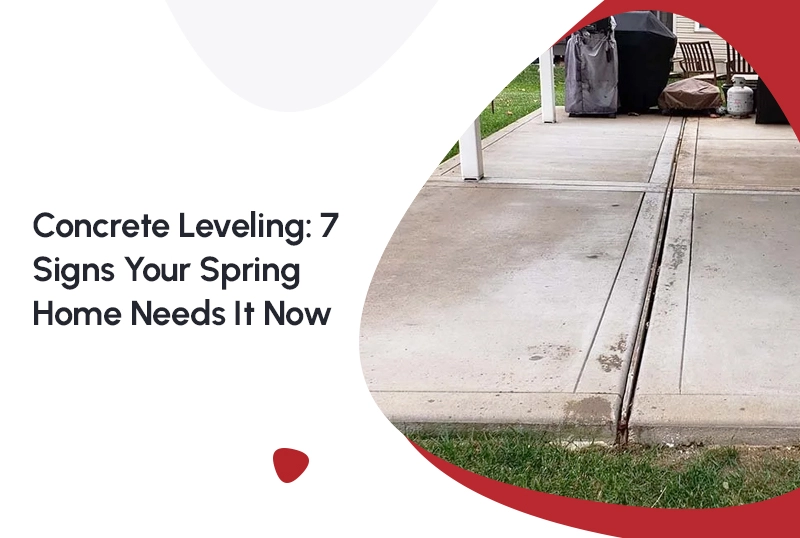
The most obvious indicator involves visually apparent sinking where concrete sections sit noticeably lower than adjacent areas. This settlement often occurs near building foundations, at control joints, or where different soil conditions meet. Even settlement measuring just 1-2 inches creates functional problems and trip hazards demanding attention. For properties experiencing foundation settlement alongside concrete issues, professional foundation repair Spring services can address both problems comprehensively.
Uneven Surfaces and Trip Hazards
Lips between concrete sections where one slab sits higher than its neighbor—create dangerous trip hazards. These height differences might seem minor, but according to the U.S. Consumer Product Safety Commission, uneven walking surfaces contribute to hundreds of thousands of injuries annually. Homeowners face liability exposure when guests trip on their property, making prompt concrete leveling both a safety and legal protection measure.
Water Pooling on Concrete
Properly graded concrete surfaces shed water away from structures. When concrete leveling issues cause reverse slopes or depression formation, water pools instead of draining. This standing water accelerates deterioration, creates ice hazards in winter, provides mosquito breeding grounds, and can direct moisture toward building foundations causing secondary damage. Observing where water collects after rain reveals settlement patterns requiring correction.
Cracks Widening in Concrete Slabs
While some concrete cracking occurs naturally, widening cracks often indicate ongoing settlement stressing the slab. As soil beneath concrete continues compressing unevenly, existing cracks expand and new fractures develop. Addressing settlement through concrete leveling stabilizes the slab, preventing crack progression and structural deterioration.
Gaps Between Concrete and Structures
Settlement creates visible separation where concrete meets buildings, garage doors, or other structures. These gaps allow water infiltration, pest entry, and indicate the concrete has moved significantly from its original position. Concrete leveling restores proper elevation and eliminates these problematic gaps.
Doors That Won’t Close Properly
For garage floor settlement, the most noticeable symptom often involves garage doors that refuse to close completely or seal properly. As the floor sinks, the door can’t reach fully closed position, compromising security and climate control. Concrete leveling corrects the floor elevation, restoring proper door function without requiring door system modifications.
Safety and Liability Concerns
Beyond functional problems, settled concrete creates genuine safety hazards. Children, elderly residents, and guests face increased fall risks on uneven surfaces. Homeowners carry liability exposure for injuries occurring on their property, with legal costs potentially far exceeding concrete leveling expenses. Proactive concrete leveling eliminates these risks while protecting property values and owner peace of mind.
Concrete Leveling Methods
Professional contractors offer several concrete leveling approaches, each with distinct characteristics, benefits, and ideal applications. Understanding these methods helps homeowners make informed decisions about their projects.
Mudjacking (Traditional Method)
Mudjacking represents the traditional concrete leveling technique, used successfully for decades. This method involves mixing a slurry of soil, cement, and water, drilling holes (typically 1-2 inches diameter) through the sunken slab, pumping the mixture beneath the concrete, and hydraulically lifting the slab as the slurry fills voids. The weight and pressure of the injected material raises the concrete to proper level.
Mudjacking offers several advantages including lower material costs than newer alternatives, proven track record spanning decades, effectiveness for large-scale projects, and ability to fill significant voids beneath slabs. However, limitations include heavier material potentially causing future settlement, larger injection holes requiring more visible patching, longer curing time before using surfaces (typically 24-48 hours), and messier process with potential cleanup challenges.
Cost-wise, mudjacking typically runs $3-$6 per square foot depending on project scope, accessibility, and regional pricing. For Spring homeowners, this translates to roughly $600-$1,200 for a standard two-car driveway concrete leveling project, significantly less than the $4,000-$8,000 replacement would cost.
Polyurethane Foam Injection (Modern Method)
Polyurethane foam injection, also called PolyLevel or poly jacking, represents modern concrete leveling technology gaining popularity for its advantages over traditional methods. This process involves drilling small holes (typically 5/8 inch diameter), injecting expanding polyurethane foam beneath the slab, monitoring lift as foam expands and hardens within minutes, and achieving precise elevation control through expansion management.
According to the Portland Cement Association, polyurethane concrete leveling provides exceptional benefits including lightweight material (typically 2-4 pounds per cubic foot versus 100+ pounds for mudjack slurry) preventing additional soil compression, rapid curing allowing surface use within 15-30 minutes, minimal injection holes creating nearly invisible repairs, waterproof properties preventing material deterioration, and superior void-filling capability reaching areas traditional slurry cannot penetrate.
The primary drawback involves higher costs typically $5-$15 per square foot for polyurethane concrete leveling. However, many Spring homeowners find the added expense justified by superior results, faster project completion, and longer-lasting performance. The technique proves particularly valuable for house leveling service Spring projects where foundation and concrete work must coordinate seamlessly.
Self-Leveling Concrete
Self-leveling concrete differs from injection methods by pouring a fluid concrete mixture over existing surfaces to create new level planes. This approach works for interior applications like basement floors or garage interiors where adding surface height proves acceptable. The self-leveling concrete flows to create perfectly level surfaces, curing to create new working planes.
This method suits situations where surface level changes don’t create problems (interior spaces), existing concrete remains sound but uneven, and thin overlays (1/4 inch to 2 inches) provide adequate correction. However, it adds weight to existing structures, raises surface elevation potentially affecting doors and clearances, and doesn’t address underlying settlement causes. For exterior concrete settlement around Spring homes, injection-based concrete leveling typically provides superior solutions.
Which Method Is Best for Spring Homes?
For Spring homeowners, polyurethane foam injection generally offers the best concrete leveling solution due to local conditions. The expansive clay soils common throughout Spring benefit from lightweight polyurethane that won’t add compressive forces accelerating future settlement. The rapid cure time proves valuable in Spring’s unpredictable weather, and the waterproof properties protect against the moisture variations driving settlement issues. While mudjacking remains viable for large projects where cost sensitivity outweighs other considerations, most residential concrete leveling projects benefit from polyurethane’s advantages.
Concrete Leveling vs. Replacement
When facing sunken concrete, homeowners must decide between concrete leveling and complete replacement. Understanding the comparison helps justify appropriate investment levels.
Cost represents the most dramatic difference. Concrete leveling typically costs 30-70% less than replacement. A driveway that would cost $6,000-$10,000 to replace might need only $1,500-$3,000 for professional concrete leveling. This cost savings allows homeowners to address problems promptly rather than deferring repairs due to budget constraints.
Time investment differs significantly as well. Concrete leveling projects typically complete within one day, with polyurethane methods allowing surface use within hours. Replacement requires demolition (1 day), removal and disposal (1 day), site preparation and forming (1-2 days), pouring and finishing (1 day), and curing before use (3-7 days minimum). The concrete leveling timeline minimizes disruption to household routines and property access.
Environmental impact favors concrete leveling substantially. Replacement generates tons of concrete waste requiring hauling and landfill space, while consuming significant new concrete production with associated carbon emissions. Concrete leveling preserves existing materials, requiring only small quantities of injection material—a far greener approach aligning with sustainable property management.
However, replacement becomes necessary when concrete shows extensive deterioration with widespread cracking, structural damage from freeze-thaw cycles or chemical exposure, insufficient thickness for intended loads, or complete failure into multiple fragments. Professional assessment determines whether concrete leveling or replacement serves particular situations best. For properties where foundation issues contributed to concrete settlement, combining foundation repair Spring solutions with concrete leveling addresses all structural concerns comprehensively.
The Concrete Leveling Process
Understanding what professional concrete leveling involves helps homeowners know what to expect and recognize quality service delivery.
The process begins with comprehensive inspection and assessment where qualified technicians evaluate settlement extent, identify underlying causes (soil issues, water problems, etc.), determine appropriate lifting technique, calculate material requirements, and provide detailed cost estimates. This assessment proves critical addressing only surface symptoms without correcting underlying causes leads to recurring problems.
During drilling and preparation, technicians strategically place injection holes based on void location and lifting requirements. Polyurethane concrete leveling requires only 5/8-inch holes placed approximately 3-4 feet apart, while mudjacking needs larger 1-2 inch holes. Hole placement follows engineering principles ensuring even lift distribution and optimal material flow.
The injection and lifting phase involves pumping material beneath slabs while monitoring elevation with laser levels or similar precision equipment. For polyurethane concrete leveling, technicians watch as expanding foam lifts slabs, stopping injection when proper elevation achieves. Mudjacking proceeds more gradually as heavier slurry fills voids and hydraulically raises concrete. Professional concrete leveling achieves precision within 1/8 inch of target elevation.
Timeline expectations vary by method and project scope. Polyurethane concrete leveling projects typically complete in 2-6 hours including setup and cleanup, with surfaces ready for use within 15-30 minutes of completion. Mudjacking takes similar installation time but requires 24-48 hours before resumed use. Either approach dramatically outpaces replacement timelines.
For properties requiring both foundation and concrete work, coordination between services proves essential. Many foundation issues manifest through concrete settlement as shifting foundations pull attached slabs. Professional pier and beam foundation repair Spring specialists can evaluate whether foundation problems contribute to concrete settlement, recommending comprehensive solutions addressing all structural concerns.
Benefits of Professional Concrete Leveling
Choosing professional concrete leveling delivers numerous advantages over both DIY attempts and concrete replacement:
Cost savings represent the most compelling benefit, with concrete leveling costing 30-70% less than replacement while delivering comparable or superior results. These savings allow homeowners to address multiple problem areas within reasonable budgets rather than prioritizing one project at others’ expense.
Increased property value stems from eliminating unsightly, dangerous settled concrete. Properly maintained concrete surfaces contribute to curb appeal and demonstrate attentive property maintenance factors home buyers value significantly. According to the National Association of Realtors, well-maintained driveways, walkways, and patios positively influence property valuations and buyer perceptions.
Long-lasting results occur when professional concrete leveling addresses underlying settlement causes alongside surface symptoms. Properly executed polyurethane concrete leveling can provide 10+ years of service, with many installations performing well beyond that timeframe when supported by appropriate drainage management and soil stabilization.
Costs of Concrete Leveling in Spring
Spring homeowners planning concrete leveling projects need realistic cost expectations for budgeting and contractor evaluation.
Average cost ranges vary by method and scope. Mudjacking typically costs $3-$6 per square foot, while polyurethane concrete leveling runs $5-$15 per square foot. For typical projects, homeowners might expect: standard driveway ($800-$2,500), patio slab ($500-$1,500), sidewalk sections ($400-$1,000), garage floor ($1,000-$3,000), or pool deck ($1,500-$4,000). These ranges reflect 2024 Spring-area pricing and vary based on specific project factors.
Return on investment analysis reveals concrete leveling‘s value proposition. Spending $1,500 to level a sunken driveway preserves a surface that would cost $6,000+ to replace a 4:1 value return. Property value protection, safety improvements, and extended concrete lifespan provide additional returns beyond direct cost comparison.
Preventing Future Concrete Settlement
While professional concrete leveling corrects existing problems, preventive measures reduce future settlement risk. Proper drainage management proves essential. Keep gutters clean and functional, extend downspouts at least 6-10 feet from concrete, maintain positive grading directing water away from structures, and address standing water promptly.
For Spring homeowners, managing expansive clay soil effects requires maintaining relatively uniform soil moisture year-round. Soaker hoses during dry periods prevent excessive soil shrinkage, while proper drainage during wet seasons prevents oversaturation. This moisture consistency minimizes the volume changes stressing concrete and causing settlement.
Conclusion: Invest in Professional Concrete Leveling
Sunken, settled concrete around your Spring home doesn’t have to mean expensive replacement projects or continued safety hazards. Professional concrete leveling offers proven solutions that restore proper elevation, eliminate trip hazards, improve drainage, and preserve existing concrete at dramatic cost savings compared to replacement. Whether choosing traditional mudjacking or modern polyurethane injection, quality concrete leveling delivers lasting results when performed by experienced professionals using proper techniques.
For Spring homeowners, the combination of expansive clay soils and seasonal moisture variations creates conditions where concrete settlement occurs frequently. Addressing these issues promptly through professional concrete leveling prevents minor problems from escalating while protecting property values, ensuring safety, and maintaining attractive, functional outdoor spaces.
Don’t let settled concrete diminish your property’s value, safety, or appearance. Contact qualified concrete leveling specialists who understand Spring’s unique soil challenges and can recommend appropriate solutions for your specific situation. Whether your needs involve straightforward driveway leveling or comprehensive solutions addressing both concrete and foundation issues, experienced professionals deliver results protecting your investment.
Take action today schedule a professional assessment of your concrete surfaces and discover how affordable, effective concrete leveling can restore your property’s safety and appeal. Your home deserves the stability and protection that only professional concrete leveling provides.
FAQs (Frequently Asked Questions)
What is the best method for concrete leveling?
- The best method for concrete leveling often depends on the specific situation. The two primary methods are slabjacking (injecting a mixture of cement and grout underneath a sunken slab) and polyurethane foam injection (using foam to raise and level concrete). Polyurethane foam is typically the more precise and environmentally friendly option, with faster curing times. Both methods are effective, but foam injection offers greater flexibility for intricate work.
Can I do concrete leveling myself?
- While it’s possible to tackle minor concrete leveling projects yourself using self-leveling compounds or kits, larger jobs or those involving substantial settling or structural issues should be handled by professionals. DIY projects can be difficult to execute properly, and mistakes can lead to further damage. Professional contractors have specialized tools and knowledge to ensure accurate leveling.
How much does it cost to have concrete leveled?
- Concrete leveling typically costs between $500 and $2,500 for most residential jobs, with prices varying based on the size of the area to be leveled and the method used. For larger areas or extensive damage, costs may rise to $3,000 or more. Always get multiple quotes to ensure you’re receiving a fair price.
Can I pour self-leveling concrete over existing concrete?
- Yes, you can pour self-leveling concrete over existing concrete as long as the surface is clean, free of debris, and in good condition. If the existing concrete has deep cracks or significant damage, it might need repair first to ensure the self-leveling concrete adheres properly and lasts.
What is the easiest way to level concrete?
- The easiest way to level concrete is to use self-leveling compound. This is a simple, fast solution that can be applied to floors or small sunken areas to create a smooth, even surface. Self-leveling compounds are designed to fill in low spots and provide a level finish without the need for professional equipment or heavy machinery.
How much does it cost to level concrete?
- The cost to level concrete generally depends on the size of the area and the method used. On average, you can expect to pay between $3 and $10 per square foot. More extensive work, like leveling large slabs or using foam injection, may cost between $1,000 and $3,000.
Is it hard to do self-leveling concrete?
- Self-leveling concrete isn’t particularly hard to apply, but it requires proper preparation and technique. The process involves mixing the compound, pouring it onto the floor, and letting it spread and settle into low areas. It’s important to work quickly, as self-leveling compounds set fast. For beginners, it’s advisable to start with small projects and practice before taking on larger, more complex tasks.