
Foundation cracks are one of the most common issues homeowners face, but not all cracks are created equal. Some are harmless hairline fractures caused by natural curing, while others are signs of foundation movement, water intrusion, or structural instability. Choosing the right foundation crack filler depends entirely on the size, cause, and behavior of the crack.
This guide breaks down everything homeowners need to know from identifying cracks to selecting the foundation crack filler and when it’s wise to bring in professional help.
Understanding Why Foundation Cracks Happen
Before choosing a foundation crack filler, it’s essential to understand why cracks appear in the first place. Not all cracks require the same treatment, and some shouldn’t be filled at all until underlying issues are addressed.
1. Natural Shrinkage During Concrete Curing
Concrete shrinks as it cures. Hairline cracks caused by normal curing are usually harmless and can be sealed easily. These cracks don’t widen over time and rarely indicate structural issues.
2. Soil Movement Beneath the Foundation
Expansive clay soils shrink when dry and expand when wet. This creates upward and downward pressure on the foundation, causing cracks. In areas where soil movement is common, homeowners may eventually need foundation repair Baytown to stabilize shifting slabs before cosmetic fixes can be effective.
3. Water Around the Foundation
Poor drainage forces water to collect around the base of the home. This weakens soil and creates hydrostatic pressure, pushing against foundation walls. Vertical and diagonal cracks are often linked to this issue.
4. Temperature Fluctuations
Freeze-thaw cycles cause concrete to expand and contract. Over time, this can turn small cracks into larger ones that require more advanced repair methods.
Types of Cracks and What They Mean
Identifying the type and behavior of a crack is crucial before selecting a foundation crack filler.
Hairline Cracks (<1/16 inch)
Usually cosmetic and often caused by curing. These can be safely sealed to prevent moisture intrusion.
Narrow but Spreading Cracks (1/16–1/8 inch)
May indicate settling or minor soil movement. Track these over time. If crack width increases, deeper issues may be present.
Horizontal Cracks
Often the most serious. They can indicate pressure from expanding soil or water-saturated backfill. These rarely call for simple crack fillers—structural reinforcement is typically required.
Stair-Step Cracks (in brick)
Often tied to foundation settling. Depending on severity, homeowners may need evaluation from structural specialists.
Types of Foundation Crack Fillers: Which One Should You Use?
Different cracks require different fillers. Here’s what homeowners should know.
1. Epoxy Injection (Best for Structural Cracks)
What it is:
A two-part epoxy foundation crack filler that hardens into a rigid, ultra-strong adhesive.
When to use it:
- Cracks caused by foundation settling
- Structural cracks that need bonding
- Cracks wider than 1/8 inch
Why it works:
Epoxy restores the concrete’s original strength. This filler can stop cracks from widening but should only be used once the cause is addressed.
2. Polyurethane Foam (Best for Leaking Cracks)
What it is:
A flexible foundation crack filler expanding foam used to seal cracks exposed to moisture.
When to use it:
- Cracks leaking water
- Basement wall cracks
- Cracks that shift slightly with seasonal soil movement
Why it works:
Polyurethane remains flexible and is ideal when movement continues. It’s excellent for waterproofing but not for structural reinforcement.
3. Hydraulic Cement (Best for Active Leaks)
What it is:
A cement foundation crack filler that expands as it cures.
When to use it:
- Patching holes
- Stopping fast-moving leaks
- Quick emergency repairs
Why it works:
It sets rapidly even under water. However, it doesn’t bond as strongly as epoxy and is not a long-term fix for structural cracks.
4. Concrete Patch Compounds (Best for Surface-Level Cracks)
What they are:
Premixed or powder-based foundation crack filler compounds for small cosmetic cracks.
When to use them:
- Thin surface cracks
- Cosmetic appearance improvements
Why they work:
They’re easy to apply and provide a smooth finish but do not address deeper issues.
Matching Crack Type to the Right Foundation Crack Filler
Here’s a simple guide homeowners can follow.
| Crack Type | Best Filler | Notes |
| Hairline | Concrete patch / liquid crack filler | Prevents water from entering |
| Narrow, spreading | Epoxy | Stops crack progression |
| Water‑leaking | Polyurethane foam | Expands to fill gaps |
| Horizontal | Epoxy + structural evaluation | May require reinforcement |
| Stair‑step | Depends on cause | Often indicates settlement |
Warning Signs That a Crack Filler Isn’t Enough
Some cracks signal deeper structural problems that can’t be solved with surface fillers.
1. Cracks Wider Than 1/4 Inch
These may indicate serious settling. If widening continues, evaluation is essential.
2. Uneven Floors or Sticking Doors
These symptoms often accompany structural shifting. In such cases, house leveling Baytown may eventually be needed depending on how much the foundation has moved.
3. Bowing or Bulging Walls
Horizontal cracks or bowing walls require professional stabilization.
4. Rapidly Growing Cracks
Movement occurring within weeks or months is a major red flag.
Additional Solutions Beyond Crack Fillers
Sometimes, using a foundation crack filler treats the symptom but not the cause. Here are solutions that may be needed depending on the underlying problem.
Improving Drainage Around the Home
- Extend downspouts 5–10 feet away
- Regrade soil to slope away from the foundation
- Install French drains if needed
Soil Stabilization Techniques
Expansive soils often require deep stabilization to prevent future foundation movement.
Structural Reinforcement Options
- Carbon fiber straps
- Wall anchors
- Steel push piers
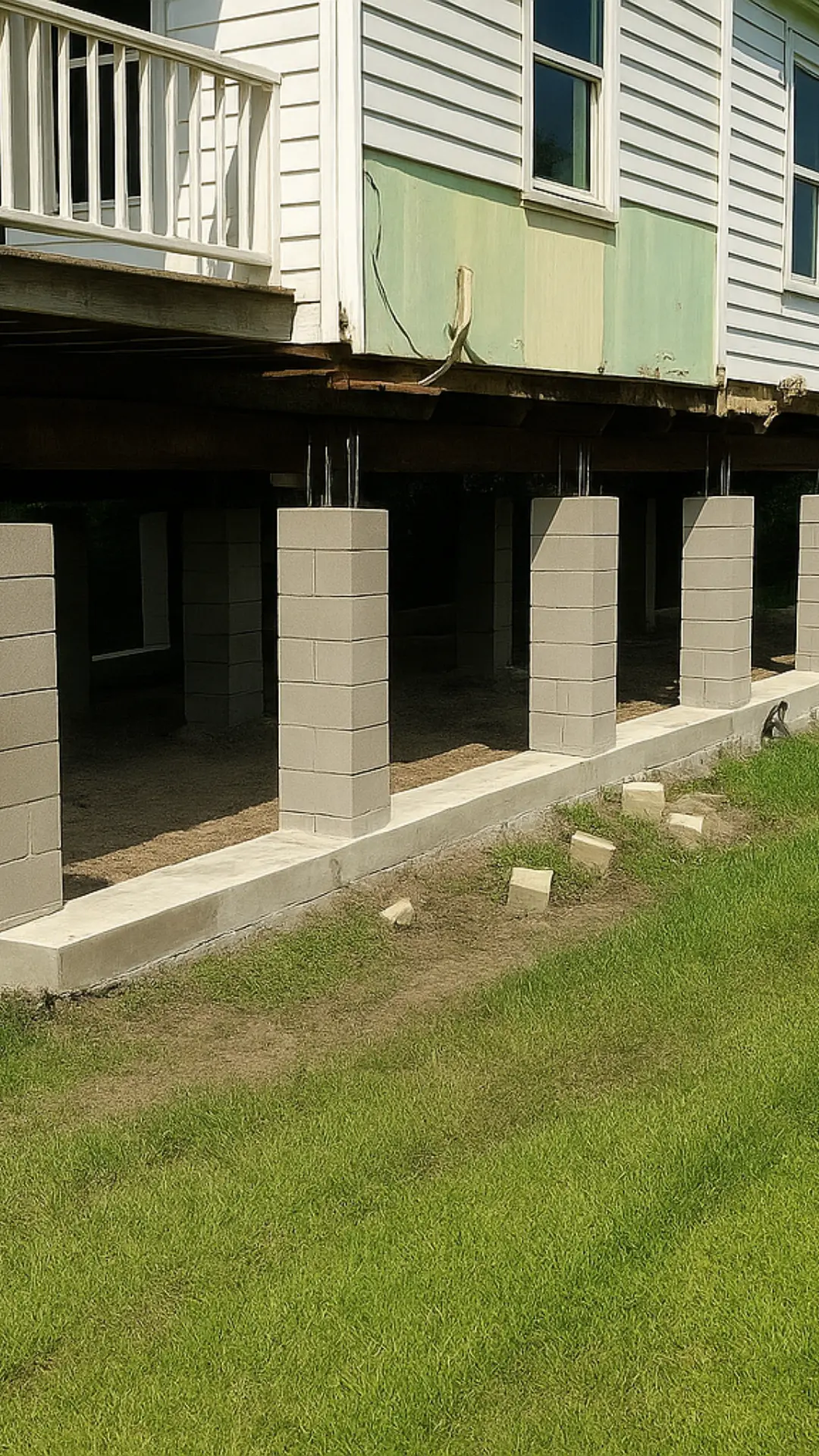
Pier and Beam Foundation Repair
Homes built on pier-and-beam systems may experience cracks due to shifting piers or rotted beams. In these cases, pier and beam foundation repair Baytown may be necessary to restore structural support before cosmetic repairs can be effective.
Step-by-Step: How to Apply Foundation Crack Filler Safely
Here’s a simple but comprehensive guide for homeowners.
Step 1: Clean the Crack
Remove loose debris, dust, or old filler using:
- A wire brush
- A shop vacuum
- Compressed air
Step 2: Widen the Crack Slightly (If Needed)
This helps filler penetrate deeper and improves adhesion.
Step 3: Inject or Apply the Foundation Crack Filler
Follow the foundation crack filler product instructions carefully. Use caulk guns, injection ports, or trowels as required.
Step 4: Smooth and Finish the Surface
For aesthetic purposes, smooth out any excess material before it cures.
Step 5: Monitor the Crack Over Time
If cracks continue expanding, deeper issues must be addressed.
Preventing Future Foundation Cracks
In some cases, deeper issues beneath the structure may require foundation repair or even house leveling Baytown before cosmetic crack fillers can be effective. These structural adjustments help ensure long-term stability and prevent recurring cracks.
A proactive approach saves thousands in the long run.
Improve Moisture Control
- Fix gutter problems
- Install a proper drainage system
- Use moisture barriers if needed
Maintain Stable Soil Conditions
Prevent extreme drying or oversaturation.
Schedule Routine Inspections
Even if cracks appear small, an annual inspection can catch hidden structural issues.
When to Call a Professional
Foundation crack filler work well for minor issues, but some conditions require expert evaluation.
Contact a professional if:
- Cracks recur after repair
- There are signs of foundation movement
- Floors become uneven or doors stick
- Water infiltration continues even after sealing
A structural specialist can diagnose soil issues, evaluate load-bearing stability, and recommend long-lasting foundation crack filler solutions.
Conclusion
Selecting the right foundation crack filler depends on understanding the cause, severity, and behavior of the crack. Hairline cracks often need simple fillers, while structural cracks require stronger materials like epoxy—and sometimes deeper interventions.
For evolving or severe cracks, solutions may go beyond fillers and include structural adjustments, soil stabilization, or leveling techniques. Whether it’s cosmetic or structural, addressing cracks early prevents more expensive problems down the road.
FAQs
1. What is the best foundation crack filler?
The best filler depends on the type of crack and whether it leaks:
For structural cracks:
- Epoxy injection is the best choice.
It bonds the concrete back together and restores structural strength.
For leaking or moving cracks:
- Polyurethane foam injection is preferred.
It expands, seals gaps, and blocks active water intrusion.
For small surface-level cracks:
- Concrete caulk or hydraulic cement works for cosmetic fixes, but not for structural cracks.
2. Should all foundation cracks be repaired or only serious ones?
Not all foundation cracks require major repair, but all cracks should be monitored or evaluated.
- Hairline cracks (<1/16 inch): Usually cosmetic; monitor for widening.
- Vertical cracks: Often from normal settling; sealing is optional unless water enters.
- Horizontal or diagonal cracks: These are more serious and often indicate soil pressure or structural movement. These should always be repaired professionally.
- Cracks wider than 1/4 inch: Require immediate evaluation.
If a crack is growing, leaking, or accompanied by other symptoms (doors sticking, sloping floors), it should be repaired.
3. Is epoxy or polyurethane injection better for long-lasting crack repair?
Both are long-lasting, but they serve different purposes:
Epoxy injection:
- Best for structural cracks.
- Creates a rigid, high-strength bond.
- Not ideal for wet or actively leaking cracks.
Polyurethane injection:
- Best for leaking or flexible cracks.
- Expands to fill voids.
- Remains flexible if the foundation moves.
If you need strength: Choose epoxy.
If you need waterproofing & flexibility: Choose polyurethane.
4. How long does concrete gap filler typically last?
Concrete fillers generally last:
- Epoxy injections: 20–30 years or more
- Polyurethane injections: 10–20 years
- Hydraulic cement: 3–10 years (can fail if the crack moves)
- Concrete caulks: 5–10 years, depending on movement and moisture
Longevity depends on soil movement, moisture levels, and whether the underlying cause of the crack was fixed.
5. Can I fix a foundation crack myself, or should I call a professional?
You can fix small cracks yourself if:
- The crack is hairline or under 1/8 inch
- It is not leaking
- No structural symptoms are present (sloping floors, sticking doors, wall separation)
Use DIY epoxy or polyurethane kits for minor repairs.
Call a professional when:
- The crack exceeds 1/4 inch
- It is horizontal, jagged, or stair-step
- Water is entering
- The crack is widening
- There are signs of foundation movement
Professional assessment ensures safety and prevents further structural damage.
6. What signs show that a foundation crack is becoming a structural problem?
A crack may indicate structural failure if you notice:
- Horizontal cracks in basement walls
- Cracks wider than 1/4 inch
- Sloping or uneven floors
- Doors or windows sticking
- Gaps around window frames or baseboards
- Cracks that continue to widen over time
- Water infiltration
- Bowing walls in a basement or crawl space
These signs indicate shifting, settlement, or pressure on the foundation that must be addressed quickly.
7. How much does it cost to permanently repair a foundation crack?
Costs vary based on severity and repair method:
- Epoxy injection: $300–$1,000 per crack
- Polyurethane injection: $400–$1,200 per crack
- Structural reinforcement (carbon fiber straps): $600–$1,200 per strap
- Underpinning (if settlement caused the crack): $3,000–$10,000+
- Waterproofing systems: $2,000–$7,000
Minor cracks are inexpensive, but structural cracks or settlement-related issues can reach several thousand dollars.