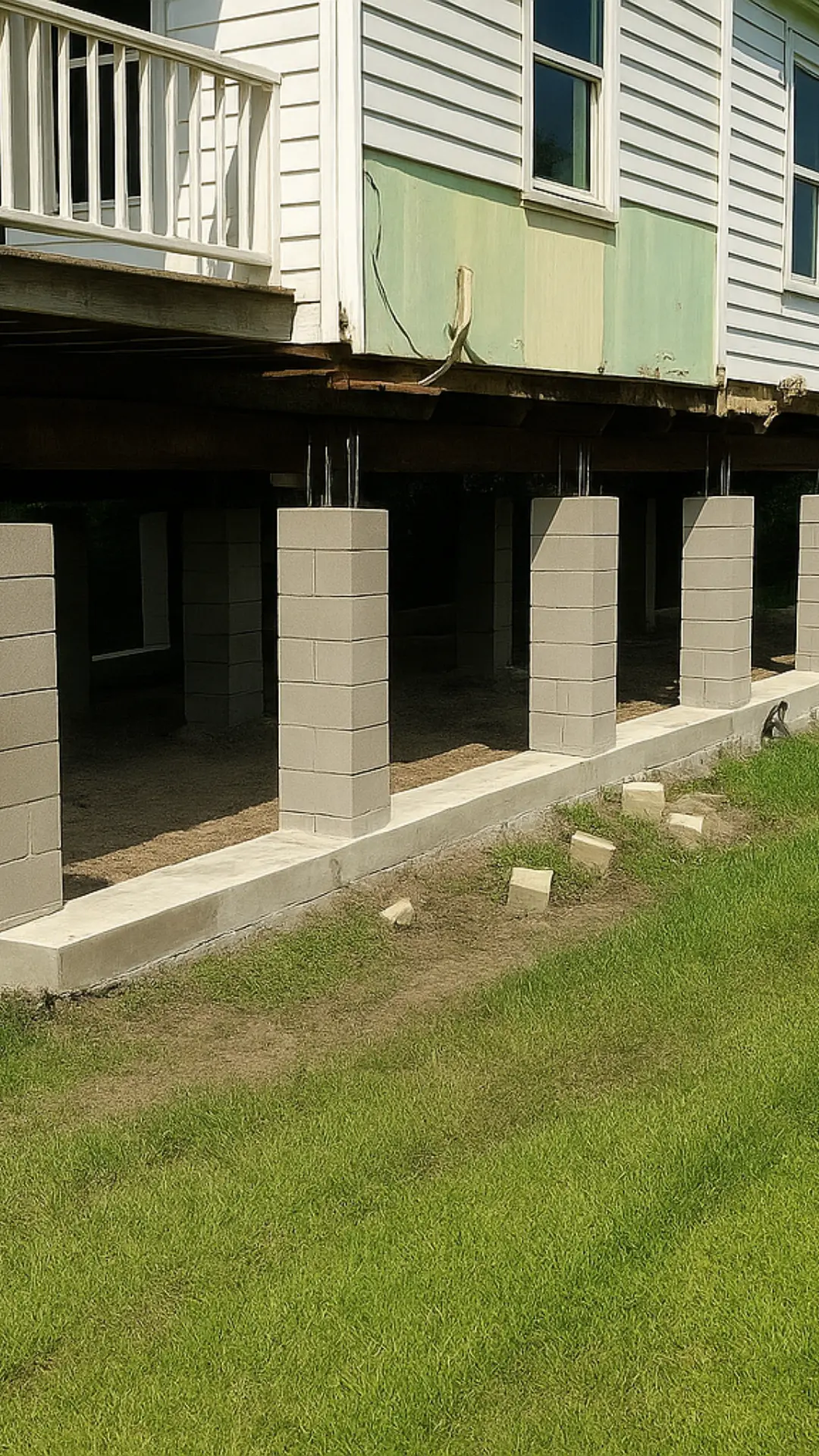

Discovering a hairline crack in foundation walls can send shivers down any homeowner’s spine. While these thin fractures might seem insignificant at first glance, understanding when they signal serious structural problems versus normal settling can save you thousands in repair costs. For Tomball homeowners dealing with expansive clay soils and fluctuating moisture levels, recognizing the difference between a harmless hairline crack in foundation and one requiring immediate professional attention proves absolutely critical for protecting your most valuable investment.
This comprehensive guide examines everything you need to know about foundation hairline cracks from identifying warning signs that demand action to understanding repair options and prevention strategies specifically tailored for Tomball’s unique soil conditions.
What Is a Hairline Crack in Foundation?
A hairline crack in foundation refers to a thin fracture in concrete typically measuring 1/16 inch (1.5mm) in width or less. These narrow fissures often appear as fine lines barely visible to the naked eye, resembling strands of hair—hence the name. Understanding what constitutes a hairline crack in foundation helps homeowners distinguish between minor cosmetic issues and potentially serious structural concerns.
Foundation hairline cracks commonly develop in both poured concrete and concrete block foundations. They typically appear vertically or at slight angles, though their orientation significantly impacts whether they pose structural threats. According to the American Concrete Institute, concrete naturally develops minor cracks as it cures and responds to environmental stresses, with hairline cracks often resulting from normal concrete shrinkage during the curing process.
However, not every hairline crack in foundation remains benign. Environmental factors, soil conditions, and structural stresses can transform innocent-looking hairline cracks into serious foundation problems. The expansive clay soils prevalent throughout Tomball create unique challenges, as seasonal moisture variations cause soil to swell when wet and contract when dry movements that stress foundations and can widen initially minor cracks.
Location matters tremendously when evaluating a hairline crack in foundation. Cracks appearing near corners, windows, doors, or where foundation walls meet floors deserve more scrutiny than those in open wall sections. Similarly, cracks extending through the entire thickness of foundation walls require different assessment than surface-level crazing.
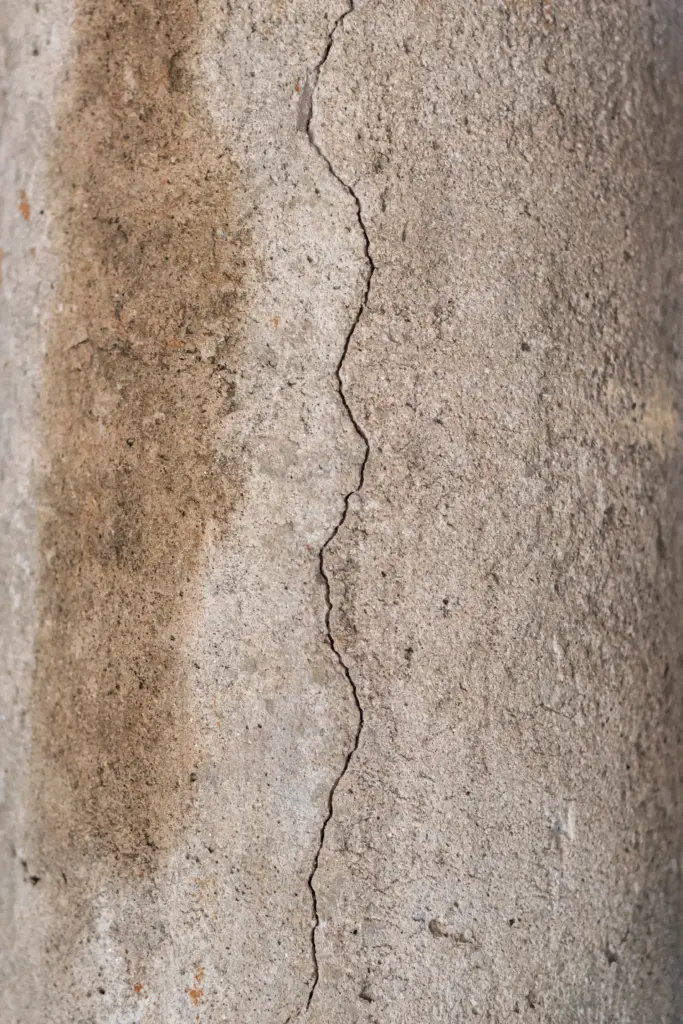
7 Warning Signs a Hairline Crack in Foundation Needs Immediate Attention
While many hairline cracks prove harmless, certain characteristics signal that professional evaluation becomes essential. Recognizing these warning signs helps Tomball homeowners act quickly before minor issues escalate into costly structural repairs.
1. The Crack Is Widening Over Time
A hairline crack in foundation that remains stable poses minimal concern. However, cracks that progressively widen indicate ongoing foundation movement requiring professional assessment. Monitor suspicious cracks by marking their endpoints with pencil and recording measurements monthly. If a hairline crack in foundation expands to 1/8 inch or wider, contact foundation specialists immediately. This widening often signals active settlement, soil movement, or hydrostatic pressure problems demanding intervention.
2. Horizontal Orientation
Vertical hairline cracks often result from normal concrete shrinkage and typically prove less concerning. However, horizontal hairline cracks in foundation walls frequently indicate serious structural stress from lateral soil pressure. The U.S. Department of Housing and Urban Development identifies horizontal foundation cracks as potentially dangerous, as they may precede foundation wall bowing or failure—particularly in basement or below-grade walls experiencing significant soil pressure.
3. Water Seepage Through the Crack
Any hairline crack in foundation that allows water infiltration requires attention regardless of size. Water penetration indicates the crack extends through the foundation wall’s full thickness, creating pathways for moisture that can cause mold growth, compromise structural integrity, and damage interior spaces. During Tomball’s heavy rain events, even small cracks can channel significant water into crawl spaces or basements, creating expensive secondary damage.
4. Multiple Cracks in the Same Area
A single isolated hairline crack in foundation may not concern you, but multiple cracks clustering in one area suggest concentrated stress points demanding professional evaluation. Clustered cracks often indicate differential settlement—where one foundation section sinks while adjacent areas remain stable. This uneven settling creates the stress concentrations producing multiple cracks.
5. Cracks Near Doors or Windows
Foundation hairline cracks appearing near door or window openings warrant special attention. These openings create natural weak points in foundation walls where stress concentrates. A hairline crack in foundation emanating from window or door corners, especially if diagonal, often indicates foundation settlement or shifting affecting the entire structure. You may notice corresponding problems like sticking doors, windows that won’t open properly, or gaps appearing around frames.
6. Stair-Step Pattern in Brick Veneer
While focusing on foundation walls, don’t ignore brick veneer cladding. Stair-step hairline cracks in brick following mortar joints often signal foundation movement below. Though the cracks themselves appear in brick rather than foundation concrete, they typically indicate underlying foundation settlement issues. According to the National Association of Home Builders, brick veneer cracks frequently manifest before visible foundation damage, serving as early warning signs that foundation problems have developed.
7. Accompanied by Other Foundation Symptoms
A hairline crack in foundation becomes more concerning when appearing alongside other foundation distress signals. Watch for sloping floors, gaps between walls and ceilings, doors and windows that stick, or visible foundation displacement. These accompanying symptoms suggest the hairline crack represents just one visible manifestation of broader foundation problems requiring comprehensive professional assessment and repair.
Common Causes of Hairline Crack in Foundation
Understanding what causes hairline cracks helps homeowners address root problems rather than just treating symptoms. Multiple factors contribute to foundation crack development, with some causes proving more serious than others.
Soil Settlement and Expansion
Tomball’s expansive clay soils create the most common cause of hairline crack in foundation development. Clay soil dramatically expands when saturated and contracts when dry, creating cyclical stress on foundations. According to the U.S. Geological Survey, expansive soils cause billions in structural damage annually across the United States, with Texas experiencing particularly severe impacts. This constant expansion and contraction can initiate hairline cracks that progressively worsen without proper foundation support and soil moisture management.
Hydrostatic Pressure
Water accumulation around foundations creates hydrostatic pressure forcing moisture through foundation walls. This pressure can initiate hairline cracks that subsequently allow water infiltration, creating a destructive cycle. Poor drainage, malfunctioning gutters, improper grading, or high water tables all contribute to hydrostatic pressure problems. Every hairline crack in foundation experiencing water seepage indicates hydrostatic pressure issues requiring drainage corrections alongside crack repair.
Poor Drainage Systems
Inadequate drainage ranks among the top causes of foundation problems. When water pools near foundations instead of draining away, it saturates surrounding soil, increasing pressure on foundation walls and contributing to crack formation. Tomball’s heavy rainfall events make proper drainage absolutely critical. Homeowners should ensure gutters and downspouts direct water at least 10 feet from foundations, and grading slopes away from houses at minimum 6 inches per 10 feet.
Tree Root Intrusion
Large trees planted too close to foundations can cause or worsen hairline cracks through root growth and water extraction. Tree roots seeking moisture grow under and around foundations, creating pressure points that stress concrete. Additionally, trees extract significant moisture from surrounding soil—particularly during dry periods—causing soil shrinkage that allows foundation settlement. A general rule suggests planting trees at distances from foundations equal to their mature height.
Concrete Curing and Shrinkage
Not every hairline crack in foundation signals serious problems. Concrete shrinks as it cures, with most shrinkage occurring within the first year after pouring. This natural process often creates minor hairline cracks that remain stable and pose no structural threat. New home foundations commonly develop these cosmetic cracks that require monitoring but not immediate repair. However, distinguishing between benign curing cracks and those indicating foundation movement requires professional expertise.
Temperature Fluctuations
Texas experiences significant temperature swings between scorching summers and occasional freezing winters. These temperature variations cause concrete expansion and contraction, potentially initiating hairline cracks—particularly in foundations experiencing repeated freeze-thaw cycles. While Tomball experiences fewer freeze-thaw events than northern climates, temperature-induced stress still contributes to crack development over time.
Poor Initial Construction
Foundation construction quality significantly impacts crack susceptibility. Inadequate concrete mix design, improper curing procedures, insufficient reinforcement, or poor excavation and compaction create foundations prone to developing hairline cracks and more serious structural issues. Unfortunately, construction defects often don’t manifest immediately, with problems appearing years after home completion.
When Is a Hairline Crack in Foundation Harmless?
Not every foundation crack demands immediate repair. Understanding when hairline cracks prove harmless helps homeowners avoid unnecessary expenses while remaining vigilant for genuine problems.
Cosmetic curing cracks in newly poured foundations often stabilize without intervention. If a hairline crack in foundation appears within the first year of construction, measures less than 1/16 inch wide, remains stable over 6-12 months of monitoring, shows no water infiltration, and appears in non-structural locations, it likely poses minimal risk. These cracks can be sealed for cosmetic purposes and moisture protection without requiring extensive foundation repairs.
However, even seemingly minor cracks warrant professional evaluation if you’re uncertain about their significance. Foundation specialists use diagnostic tools including elevation surveys, crack monitoring systems, and soil analysis to distinguish between cosmetic issues and early-stage structural problems. This professional assessment often costs far less than repairs needed if minor cracks evolve into major foundation failures.
Professional Repair Solutions for Hairline Crack in Foundation
When a hairline crack in foundation requires repair, several proven solutions effectively address the problem depending on crack severity, location, and underlying causes.
Epoxy Injection
Epoxy injection represents the gold standard for repairing non-moving hairline cracks in foundation walls. This method involves injecting two-part epoxy resin into cracks under pressure, filling voids and bonding crack surfaces together. Once cured, epoxy creates bonds stronger than surrounding concrete, effectively welding cracks closed. Epoxy injection works excellently for stable hairline cracks in poured concrete foundations and provides both structural repair and waterproofing benefits.
Polyurethane Foam Injection
For hairline cracks in foundation walls experiencing active water infiltration, polyurethane foam injection often proves superior to epoxy. This flexible foam expands upon injection, filling cracks and voids while accommodating minor ongoing movement. Polyurethane’s hydrophobic properties make it particularly effective for wet conditions, as it reacts with water to create impermeable seals. This solution works well for Tomball foundations experiencing seasonal moisture variations.
Carbon Fiber Reinforcement
When a hairline crack in foundation indicates wall bowing or structural stress, carbon fiber reinforcement provides exceptional strengthening without extensive excavation. Contractors apply carbon fiber straps or grids to foundation walls using high-strength epoxy adhesives. These reinforcements prevent crack progression and stabilize foundation walls experiencing lateral pressure. Carbon fiber proves particularly valuable for basement or crawl space foundations showing multiple hairline cracks from soil pressure.
Foundation Stabilization Systems
Sometimes a hairline crack in foundation signals underlying settlement requiring comprehensive foundation stabilization. When cracks result from differential settlement or bearing capacity failures, addressing surface cracks alone proves inadequate. Professional foundation repair Tomball specialists employ various stabilization systems including steel piers, helical piers, or concrete pressed pilings to anchor foundations to stable soil strata, halting settlement and preventing crack progression.
For homes with pier and beam foundations showing hairline cracks in support beams or foundation components, specialized pier and beam foundation repair Tomball services address both structural support issues and crack remediation. These foundations require different approaches than slab foundations, with repairs focusing on beam replacement, pier stabilization, and proper support distribution.
Properties experiencing significant foundation settlement accompanied by hairline cracks may require comprehensive house leveling service Tomball solutions. These services combine foundation lifting, stabilization, and crack repair to restore proper foundation alignment and eliminate stress causing crack development.
Waterproofing Solutions
Beyond structural repairs, protecting foundations from moisture proves essential for preventing future crack development. Professional waterproofing combines exterior drainage improvements, foundation sealants, and interior moisture control systems. These solutions address the hydrostatic pressure and water infiltration that initiate and worsen hairline cracks in foundation structures.
DIY Monitoring vs. Professional Assessment
Homeowners can monitor hairline cracks in foundation walls using simple techniques, but knowing when to seek professional help prevents minor issues from becoming major problems.
For DIY monitoring, mark crack endpoints with pencil, record measurements, and photograph cracks monthly. Note any changes in crack width, length, or water infiltration. This documentation helps professionals assess crack progression if you later request evaluation. However, monitoring never replaces professional assessment when cracks show concerning characteristics.
Professional foundation specialists bring expertise and diagnostic equipment homeowners cannot replicate. They use laser levels to measure floor slopes indicating settlement, conduct elevation surveys mapping foundation movement, analyze soil conditions affecting foundation performance, and identify underlying problems that surface cracks merely symptomize. The Texas A&M AgriLife Extension Service emphasizes working with licensed professionals familiar with local soil conditions for accurate foundation problem diagnosis.
The cost of professional assessment typically ranges from free to several hundred dollars—a small investment compared to repair expenses that escalate when problems go unaddressed. Many reputable Tomball foundation companies offer free inspections, providing homeowners with expert opinions without financial commitment.
Preventing Hairline Crack in Foundation Development
Proactive maintenance significantly reduces the likelihood of developing problematic foundation cracks. Tomball homeowners should implement these preventive strategies:
Maintain consistent soil moisture around foundations through strategic watering during dry periods. Expansive clay soils cause most foundation problems when experiencing extreme moisture fluctuations. Soaker hoses placed 12-18 inches from foundations can maintain stable soil moisture, preventing the dramatic shrinkage that allows settlement and crack formation.
Ensure proper drainage by maintaining gutters and downspouts, directing water at least 10 feet from foundations. Check that grading slopes away from houses, and install drainage systems like French drains where water tends to accumulate. Proper drainage prevents the hydrostatic pressure that contributes to crack development and water infiltration.
Control vegetation near foundations by keeping large trees and shrubs at appropriate distances. Tree roots seeking moisture can stress foundations and extract soil moisture causing shrinkage. Remove trees showing signs of foundation interference or install root barriers preventing invasive growth.
Schedule regular foundation inspections annually to catch problems early. Professional inspections identify minor issues before they require expensive repairs. Early detection of a developing hairline crack in foundation allows simple preventive measures rather than extensive structural repairs.
Address plumbing leaks promptly, as slab leaks and drainage problems saturate soil beneath foundations, contributing to settlement and crack formation. Unexplained water bill increases, persistent foundation moisture, or plumbing performance issues all warrant immediate investigation.
Conclusion: Protecting Your Tomball Home from Foundation Damage
A hairline crack in foundation walls doesn’t automatically spell disaster, but it does demand attention. Understanding when these cracks indicate serious problems versus normal settling empowers homeowners to act appropriately—neither panicking over minor cosmetic issues nor ignoring signs of genuine structural distress.
For Tomball homeowners, the expansive clay soils and dramatic weather variations create challenging conditions for foundation longevity. Regular monitoring, proactive maintenance, and quick response to warning signs protect your investment and prevent small problems from becoming expensive structural nightmares.
If you’ve discovered a hairline crack in foundation walls and feel uncertain about its significance, don’t gamble with your home’s structural integrity. Contact professional foundation specialists who understand Tomball’s unique soil challenges and can accurately assess whether your foundation cracks require repair or simply monitoring. Early professional intervention often means the difference between simple crack sealing and extensive foundation reconstruction.
Don’t wait until that hairline crack in foundation becomes a structural crisis. Schedule a professional foundation inspection today and gain peace of mind knowing your home’s structural health. Your foundation supports everything above it treat it with the attention it deserves.
FAQs (Frequently Asked Questions)
1. Are hairline cracks in foundation normal?
Yes, hairline cracks are very common in concrete foundations. They usually occur due to normal concrete curing and minor settling of the home. As long as the crack is thin (less than 1/16 inch) and not growing, it’s typically not a structural concern.
However, monitoring is important changes in width or direction may signal a developing issue.
2. Should I worry about hairline cracks in foundation?
In most cases, hairline cracks don’t require major concern, but you should not ignore them completely.
Worry if you notice:
- The crack is widening over time
- Water is seeping through it
- The crack grows into a stair-step or horizontal pattern
- Floors begin to slope or doors start sticking
These signs may indicate deeper foundation movement.
3. How to fix a hairline crack in foundation?
Repair depends on whether the crack is structural or cosmetic.
For non-structural hairline cracks, common fixes include:
- Concrete caulk
- Epoxy crack filler
- Polyurethane sealant for waterproofing
- Hydraulic cement (for active leaks)
Structural cracks require professional injection repair (epoxy or polyurethane foam).
4. Can a hairline crack be repaired?
Absolutely. Hairline cracks can be repaired easily and inexpensively. Most can be sealed in minutes using DIY fillers.
But if the crack continues to grow, becomes wider than 1/8 inch, or allows water infiltration, a professional foundation repair contractor should inspect the area.
5. How to tell if a foundation crack is structural?
A crack is considered structural if you notice:
- Width greater than 1/4 inch
- Horizontal or stair-step patterns
- Bulging foundation walls
- Cracks that widen at the top or bottom
- Sloping floors or sticking doors
- Repeated water intrusion
Structural cracks are serious and require immediate professional evaluation.
6. What does a concerning foundation crack look like?
A crack becomes concerning when it shows:
- Horizontal direction (sign of soil pressure)
- Diagonal cracks wider at one end (differential settlement)
- Stair-step cracks in brick or block walls
- A crack that keeps getting longer or wider
- Water seepage through the crack
These can signal foundation movement and should be inspected ASAP.
7. Does home insurance cover foundation repair?
Usually No home insurance does not cover foundation cracks caused by:
- Normal settling
- Soil movement
- Poor drainage
- Aging/construction defects
Insurance may cover repairs only if the crack was caused by a sudden, accidental event, such as:
- Burst plumbing
- Fire
- Vehicle impact
- Certain storm-related damage (policy-dependent)
Always review your policy or speak with your insurer for exact coverage.