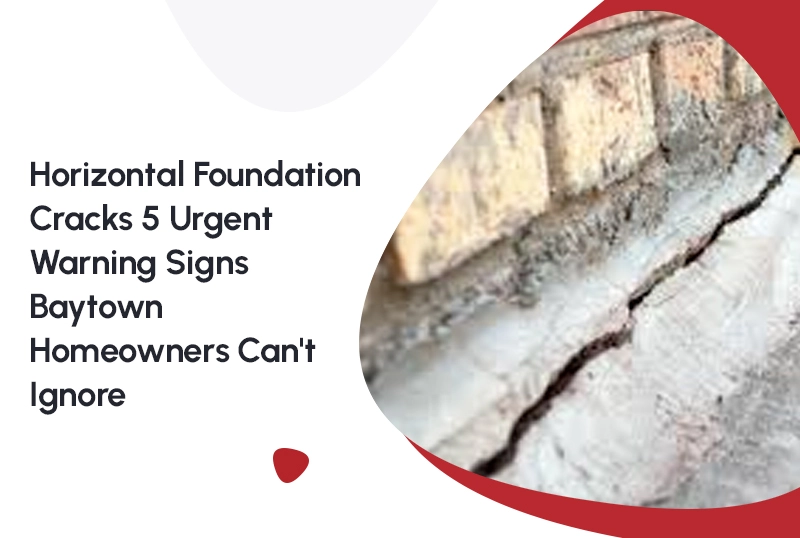
If you’ve discovered horizontal foundation cracks in your basement or crawl space walls, you’re facing one of the most serious foundation problems a homeowner can encounter. Unlike vertical cracks that often result from normal settling, horizontal foundation cracks indicate dangerous lateral pressure pushing against your foundation walls pressure that can lead to wall collapse if left unaddressed.
For Baytown homeowners dealing with expansive clay soils and heavy rainfall, understanding the severity of horizontal foundation cracks and acting quickly can mean the difference between a manageable repair and a catastrophic structural failure costing tens of thousands of dollars.
This comprehensive guide examines everything you need to know about horizontal foundation cracks, from identifying critical warning signs to understanding repair options specifically suited for Baytown’s challenging soil conditions and climate.
Why Horizontal Foundation Cracks Are Extremely Dangerous
Horizontal foundation cracks represent one of the most alarming structural issues homeowners face because they indicate walls experiencing significant lateral pressure from soil outside the foundation. Understanding why horizontal foundation cracks prove so dangerous requires examining the structural mechanics at play.
Foundation walls are designed to support vertical loads from the structure above. However, soil surrounding foundation walls exerts lateral (sideways) pressure, particularly when saturated with water or when expansive clay soils swell. According to the American Society of Civil Engineers, foundation walls must resist both vertical compression and lateral soil pressure to maintain structural integrity. When horizontal foundation cracks appear, they signal that lateral forces are overwhelming the wall’s capacity to resist sideways movement.
The physics behind horizontal foundation cracks explains their severity. When soil pressure pushes against foundation walls, the wall acts like a beam supported at top and bottom. This creates maximum stress at the wall’s mid-height, where horizontal foundation cracks most commonly appear. As cracks develop and widen, the wall loses structural capacity, allowing more inward movement. This creates a destructive cycle: more movement causes wider cracks, which permit additional movement, progressively weakening the wall until catastrophic failure becomes imminent.
Vertical cracks, by contrast, typically result from concrete shrinkage, minor settling, or thermal expansion natural processes that rarely threaten structural stability. The U.S. Department of Housing and Urban Development categorizes horizontal foundation cracks as high-priority structural concerns requiring immediate professional evaluation, while vertical cracks under 1/4 inch often need only monitoring.
For Baytown homeowners, the risk intensifies due to local soil conditions. The Texas Gulf Coast region features expansive clay soils that dramatically increase volume when wet and shrink when dry. During heavy rain events common in Baytown these soils exert tremendous lateral pressure against foundation walls. If drainage systems fail to redirect water away from foundations, hydrostatic pressure builds, creating the exact conditions that cause horizontal foundation cracks to form and worsen rapidly.
5 Urgent Warning Signs of Serious Horizontal Foundation Cracks
Not every foundation crack demands panic, but horizontal foundation cracks accompanied by these warning signs require immediate professional attention. Recognizing these indicators helps Baytown homeowners understand when their situation has progressed beyond minor concern into genuine emergency territory.
1. The Horizontal Crack Extends Beyond 3 Feet in Length
Short horizontal foundation cracks under 12 inches may indicate localized stress or minor construction flaws. However, horizontal foundation cracks exceeding 3 feet in length signal widespread lateral pressure affecting large wall sections. These extensive cracks suggest soil pressure problems extending across significant foundation areas rather than isolated weak points.
Long horizontal foundation cracks frequently indicate one of several serious conditions: pervasive hydrostatic pressure from drainage failure affecting the entire wall, expansive soil exerting uniform lateral force across the foundation, or improper backfill creating widespread instability. According to the National Association of Home Builders, horizontal cracks exceeding 3 feet typically require engineered reinforcement systems rather than simple crack sealing.
2. Visible Wall Bowing Inward or Outward
When horizontal foundation cracks accompany noticeable wall deflection, you’re witnessing active structural failure. Wall bowing indicates the foundation wall is physically moving under lateral pressure the crack merely marks where concrete failed as the wall bent. Even slight bowing (1/2 inch or more) represents serious structural compromise demanding immediate intervention.
To check for bowing, stretch a string along the wall’s length at multiple heights, or place a long straight edge against the wall surface. Any gap between the wall and straight edge indicates deflection. Basement walls typically bow inward from external soil pressure, while above-grade walls might bulge outward from internal forces. Professional foundation repair Baytown specialists use laser levels and precise measurement tools to document exact deflection amounts, which inform repair strategies and assess urgency.
Wall bowing combined with horizontal foundation cracks creates genuine emergency conditions. The wall is actively failing, and continued movement could accelerate suddenly. Winter freezing, heavy rains saturating soil, or even minor earthquakes can trigger rapid progression from gradual bowing to catastrophic collapse in compromised walls.
3. Multiple Horizontal Cracks at the Same Height
A single horizontal crack might represent an isolated weak point or construction flaw. However, multiple horizontal foundation cracks appearing at similar elevations around your foundation perimeter indicate systemic lateral pressure affecting your entire foundation. This pattern suggests uniform soil conditions creating consistent stress patterns exactly what occurs when drainage fails across your property or expansive soils swell uniformly around foundations.
Multiple horizontal foundation cracks also indicate that simple spot repairs won’t solve your problem. The underlying pressure source must be addressed through comprehensive drainage correction, soil management, or structural reinforcement extending around affected foundation sections. Ignoring the systemic nature of multiple cracks at consistent heights inevitably leads to repair failure and recurring problems.
4. Crack Width Exceeds 1/4 Inch
Horizontal foundation cracks measuring 1/4 inch wide or greater have progressed well beyond hairline fractures into serious structural damage territory. Wide horizontal foundation cracks allow water infiltration, creating additional problems beyond structural concerns. Water entering through cracks saturates surrounding soil, increasing hydrostatic pressure and accelerating crack growth. Interior moisture from crack seepage promotes mold growth, damages finishes, and creates unhealthy living conditions.
Measuring crack width accurately requires simple tools a ruler, crack gauge, or even common objects of known thickness. A nickel measures approximately 1/16 inch thick, while a quarter is roughly 1/16 inch. If a quarter slides easily into horizontal foundation cracks, you’re dealing with significant structural damage requiring professional assessment and repair.
Wide horizontal foundation cracks also complicate repair. Narrow stable cracks might respond to epoxy injection and monitoring, but wide horizontal foundation cracks typically demand structural reinforcement preventing further movement before crack repair provides lasting results. For properties with pier and beam foundations showing wide cracks in foundation walls or support beams, specialized pier and beam foundation repair Baytown services address both crack repair and overall structural stabilization.
5. Stair-Stepping Pattern Combining Horizontal and Vertical Cracks
When horizontal foundation cracks connect with vertical cracks creating stair-step patterns, you’re observing classic shear failure indicators. These diagonal crack patterns follow mortar joints in concrete block foundations or cut through poured concrete at roughly 45-degree angles, representing maximum shear stress orientations where combined vertical and horizontal forces concentrate.
Stair-stepping cracks involving horizontal foundation cracks often originate from differential settlement where one foundation section sinks while adjacent areas remain stable, creating both vertical stress (from settlement) and horizontal stress (from uneven support). This combination proves particularly destructive because it attacks foundation integrity from multiple directions simultaneously.
The Federal Emergency Management Agency identifies stair-step cracking as high-priority structural damage requiring engineered evaluation and repair. These cracks rarely stabilize on their own and typically worsen progressively as underlying settlement or lateral pressure continues. Properties showing stair-step patterns incorporating horizontal foundation cracks often require comprehensive foundation stabilization including underpinning, wall reinforcement, and drainage correction.
Common Causes of Horizontal Foundation Cracks
Understanding what creates horizontal foundation cracks helps homeowners address root problems rather than merely treating visible symptoms. Several factors contribute to lateral pressure causing horizontal crack formation.
Hydrostatic Pressure from Poor Drainage
Water accumulation around foundations creates hydrostatic pressure the force exerted by standing or slowly moving water against foundation walls. When gutters fail, downspouts discharge too close to foundations, or grading slopes toward rather than away from houses, water saturates soil surrounding foundations. This saturation dramatically increases soil weight and lateral pressure against walls.
Hydrostatic pressure intensifies during heavy rainfall events common in Baytown. Clay soils with poor drainage characteristics trap water against foundations, maintaining pressure long after rains end. According to the U.S. Geological Survey, saturated clay soil can exert lateral pressures exceeding 100 pounds per square foot enough force to crack concrete and bow foundation walls.
Every instance of horizontal foundation cracks with accompanying water seepage indicates hydrostatic pressure problems. Effective repairs must address both structural damage and drainage failures causing the pressure. Simply sealing horizontal foundation cracks without correcting drainage ensures cracks will reopen or new damage will develop as pressure continues.
Expansive Clay Soils
Baytown’s expansive clay soils create unique challenges for foundation integrity. These soils contain minerals that absorb water and swell significantly sometimes increasing volume by 10% or more when saturated. The Texas A&M AgriLife Extension Service reports that expansive soils cause more foundation damage in Texas than any other single factor, with billions in annual repair costs statewide.
When expansive clay soils surrounding foundations absorb moisture, they expand outward, pushing against foundation walls with tremendous force. This lateral pressure creates the exact conditions causing horizontal foundation cracks. During dry periods, the same soils shrink away from foundations, creating voids and allowing walls to shift. These cycles of expansion and contraction progressively damage foundations, widening existing horizontal foundation cracks and creating new damage.
Managing expansive soil effects requires maintaining relatively consistent soil moisture through strategic watering during dry spells and ensuring proper drainage during wet periods. However, once horizontal foundation cracks indicate significant damage, soil management alone proves insufficient structural repairs become necessary to restore foundation integrity.
Tree Roots and Vegetation Pressure
Large trees planted too close to foundations create lateral pressure through root growth and moisture extraction. Tree roots seeking water grow under and around foundations, physically displacing soil and creating pressure against walls. Oak, willow, and cottonwood trees prove particularly problematic, with aggressive root systems extending twice the canopy diameter or more.
Additionally, trees extract significant soil moisture, causing shrinkage in expansive clay soils. This shrinkage allows foundation movement and creates conditions where seasonal moisture variations produce alternating pressure and void formation cycles that progressively worsen horizontal foundation cracks over time.
Improper Backfill During Construction
Foundation construction quality significantly impacts long-term crack susceptibility. When excavated areas around new foundations receive poor backfill using organic-rich soil, failing to compact in lifts, or backfilling while soil remains too wet the foundation starts life with compromised lateral support. As backfill settles and consolidates over years, it creates lateral pressure irregularities and support voids that stress foundation walls.
Horizontal foundation cracks appearing within the first 1-3 years of construction often indicate backfill problems. Unfortunately, addressing construction defects requires excavation and proper backfill replacement expensive remediation that builders sometimes dispute or building warranties exclude.
Where Horizontal Foundation Cracks Typically Appear
Horizontal foundation cracks follow predictable patterns based on structural mechanics and typical stress distributions. Understanding common locations helps homeowners identify and monitor vulnerable areas.
Basement and Below-Grade Walls
Horizontal foundation cracks most commonly affect basement walls and below-grade foundation sections where maximum soil pressure occurs. Full-height basement walls experience greatest lateral pressure at mid-height typically 4-5 feet below grade for standard 8-foot basement walls. This explains why horizontal foundation cracks most frequently appear at this elevation.
Mid-Wall vs. Top/Bottom Locations
Structural mechanics dictate that laterally loaded walls experience maximum stress at mid-height. Therefore, horizontal foundation cracks appearing halfway up foundation walls indicate classic lateral pressure failure. Cracks near the top or bottom of walls suggest different failure mechanisms possibly related to settlement, inadequate wall reinforcement, or construction defects at wall-to-footing connections.
For comprehensive assessment of foundation problems, homeowners should document horizontal foundation cracks locations precisely, noting height above floor, distance from corners, and orientation. This documentation helps professionals diagnose underlying causes and design appropriate repairs. Properties experiencing complex foundation issues involving both horizontal cracks and settlement may require house leveling service Baytown specialists who can address multiple foundation problems comprehensively.
Professional Repair Solutions for Horizontal Foundation Cracks
Addressing horizontal foundation cracks demands professional expertise and engineered solutions. Several proven repair methods effectively stabilize walls and prevent progression, with technique selection depending on crack severity, wall condition, and underlying causes.
Carbon Fiber Reinforcement Systems
For horizontal foundation cracks in walls showing minimal bowing (under 1 inch), carbon fiber reinforcement provides excellent stabilization. This method involves bonding high strength carbon fiber straps vertically across horizontal foundation cracks using structural epoxy adhesives. The carbon fiber stronger than steel by weight prevents additional inward wall movement while remaining virtually invisible after installation.
Carbon fiber reinforcement works best for horizontal foundation cracks resulting from one-time events or when underlying pressure sources have been eliminated through drainage correction. The International Code Council recognizes carbon fiber as approved foundation reinforcement meeting structural code requirements when properly engineered and installed.
Steel I-Beam Installation
Steel I-beams provide heavy-duty reinforcement for seriously compromised walls with significant horizontal foundation cracks and noticeable bowing. Contractors install vertical steel beams against foundation walls at strategic spacing, anchoring them to basement floors and floor joists above. These beams prevent additional inward movement and can sometimes straighten walls through gradual tightening.
Wall Anchor Systems
When horizontal foundation cracks result from active external soil pressure that drainage correction cannot fully eliminate, wall anchor systems provide permanent stabilization. These systems involve installing steel anchors in stable soil beyond the foundation, connecting them through the wall to interior plates. Gradual tightening pulls walls back toward original positions while anchors resist external pressure.
Drainage Correction
Regardless of which structural repair method addresses horizontal foundation cracks, correcting underlying drainage problems proves essential for lasting results. Professional drainage correction typically includes installing or upgrading perimeter drainage systems, regrading soil to slope away from foundations, extending downspouts, installing sump pumps when necessary, and sometimes adding exterior waterproofing membranes.
The Cost of Ignoring Horizontal Foundation Cracks
Procrastination when horizontal foundation cracks appear creates escalating problems and expenses. Understanding progression timelines motivates timely action.
Minor horizontal foundation cracks left unaddressed typically widen by 1/8 to 1/4 inch annually under continuing pressure faster during wet years or with drainage failures. As cracks widen, repair complexity and costs increase proportionally. A $3,000-$5,000 carbon fiber repair today might require $15,000-$25,000 steel beam systems in 2-3 years if walls bow significantly.
Most seriously, severely compromised walls with extensive horizontal foundation cracks can collapse suddenly under triggering events like heavy rains, soil saturation, or minor tremors. Wall collapse creates immediate safety hazards and repair costs often exceeding $50,000-$100,000 for emergency stabilization and reconstruction.
Preventing Horizontal Foundation Cracks
While some factors causing horizontal foundation cracks lie beyond homeowner control, proactive maintenance significantly reduces risk:
Install and maintain comprehensive drainage systems directing water away from foundations. Clean gutters seasonally, ensure downspouts extend 10+ feet from foundations, and verify grading slopes away from houses at minimum 5% grade.
Schedule annual foundation inspections allowing professionals to identify emerging horizontal foundation cracks while still minor and monitor existing cracks for progression indicating active problems requiring intervention.
Conclusion: Act Immediately on Horizontal Foundation Cracks
Horizontal foundation cracks represent genuine structural emergencies demanding immediate professional attention. Unlike vertical cracks that often prove benign, horizontal foundation cracks indicate dangerous lateral pressure actively compromising your foundation’s structural integrity. For Baytown homeowners, expansive clay soils and heavy rainfall create perfect conditions for lateral pressure problems to develop and worsen rapidly.
Don’t gamble with your home’s structural safety and your family’s wellbeing. If you’ve discovered horizontal foundation cracks in your foundation walls, contact qualified foundation specialists immediately for professional evaluation. Experienced contractors understand Baytown’s unique soil challenges and can accurately assess your horizontal foundation cracks severity, identify underlying pressure sources, and recommend appropriate repair strategies preventing catastrophic failure.
The difference between a manageable repair and catastrophic wall collapse often comes down to timely intervention. Early professional assessment and repair of horizontal foundation cracks typically costs a fraction of emergency repairs after walls fail. Protect your investment, ensure your family’s safety, and gain peace of mind by addressing horizontal foundation cracks promptly.
Schedule your professional foundation inspection today your home’s structural integrity depends on it.
FAQs (Frequently Asked Questions)
1. How serious are horizontal foundation cracks?
Horizontal foundation cracks are considered one of the most dangerous types of foundation damage. They usually indicate excessive lateral pressure from soil, hydrostatic pressure, or structural movement pushing against the foundation wall.
This type of crack can lead to:
- Bowing or bulging walls
- Structural instability
- Water intrusion
- Risk of partial wall collapse
Horizontal cracks require immediate professional inspection and are never considered “minor.”
2. Which is worse, horizontal or vertical foundation cracks? (Alternative Answer)
Horizontal cracks are generally far more serious than vertical cracks because they indicate pressure from the outside pushing against the foundation wall. This type of pressure often comes from expanding soil, hydrostatic water pressure, or poor drainage forces strong enough to bend, bow, or completely fail a foundation wall if left untreated.
Vertical cracks, on the other hand, are usually caused by normal settling and are often less severe. While they can still allow water in and may need sealing, they rarely indicate structural failure on their own.
In short:
- Horizontal cracks = structural warning sign (requires urgent professional repair)
- Vertical cracks = settling-related and often repairable with sealing or injection
If you ever see a horizontal crack even a thin one treat it as a high-priority structural concern.
3. How do you repair a horizontal foundation crack?
Repair depends on the severity, but typically involves structural reinforcement, not just sealing. Common repair methods include:
- Carbon fiber straps to stabilize bowing walls
- Steel beams for major movement
- Wall anchors to pull the wall back into alignment
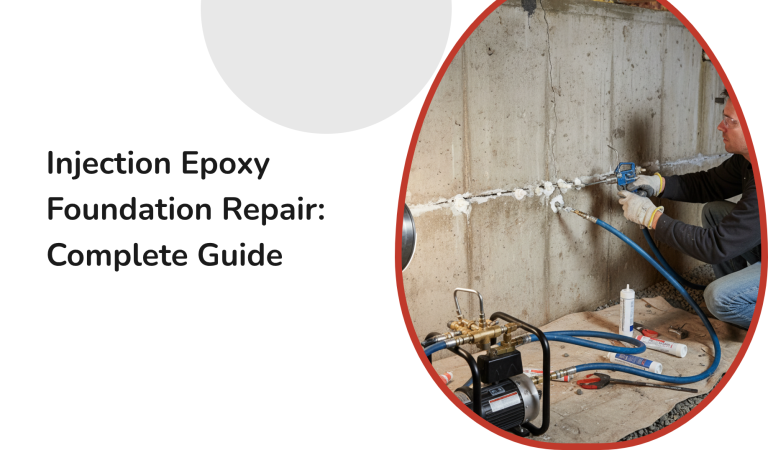
- Epoxy injection to bond cracked concrete
- Exterior drainage correction to relieve soil pressure
Horizontal crack repairs must be done by licensed foundation repair specialists.
4. Can horizontal foundation cracks be fixed?
Yes, but they require professional structural repair, not DIY products. Horizontal cracks can be successfully fixed using:
- Carbon fiber reinforcement
- Steel beams
- Wall anchor systems
- Underpinning (if settlement is involved)
- Drainage and soil pressure mitigation
Repairs can restore the wall’s strength and stop further movement, but only if addressed early.
5. Is it worth buying a house with a horizontal foundation crack?
Proceed with caution. A house with a horizontal crack can still be a good purchase if:
- A structural engineer evaluates the damage
- You receive a written repair plan
- The seller provides repair credits or completes repairs
- The foundation is stabilized by professionals
Without proper documentation, a horizontal crack is a major red flag due to high repair costs and potential long-term risk.
6. What are the red flags when buying a house with horizontal cracks?
Major warning signs include:
- Bowing or bulging in the foundation wall
- Cracks wider than ¼ inch
- Water seepage or staining
- Doors and windows sticking
- Uneven floors
- Fresh paint over cracks (attempt to hide damage)
- Expansive clay soil regions (higher risk)
If multiple signs appear together, it indicates active structural movement, not old damage.
7. Are horizontal foundation cracks always structural?
In 99% of cases, yes. Horizontal cracks are almost never “cosmetic.” They typically mean:
- Hydrostatic pressure is pushing the wall inward
- Soil expansion is stressing the wall
- There is a structural load issue
- The foundation is failing in that section
Even small horizontal cracks require immediate evaluation, because they can worsen quickly.