When your home’s foundation develops serious structural issues, the consequences extend far beyond cosmetic concerns you’re facing potential catastrophic failure that threatens your family’s safety and your property’s value. Structural foundation repair addresses the critical damage that compromises your home’s integrity, from severe settlement causing walls to crack and floors to slope, to failing support systems that put entire structures at risk. For Pearland homeowners, the combination of expansive clay soils, seasonal moisture extremes, and aging foundations creates perfect conditions for structural problems demanding professional intervention.
Unlike minor cosmetic repairs that simply mask surface symptoms, structural foundation repair tackles fundamental problems affecting your home’s load-bearing capacity and stability. This comprehensive guide examines everything Pearland property owners need to know about structural foundation repair, from recognizing warning signs to understanding repair methods, navigating costs, and selecting qualified contractors who can restore your home’s structural integrity.
What Is Structural Foundation Repair?
Structural foundation repair constitutes comprehensive engineering solutions addressing serious foundation damage that affects a building’s load bearing capacity, stability, and safety. This specialized work goes far beyond patching cracks or minor adjustments structural foundation repair involves installing deep foundation support systems, stabilizing failing walls, replacing deteriorated structural components, and restoring proper load distribution throughout foundations.
The distinction between cosmetic and structural foundation repair proves critical. Cosmetic repairs address superficial issues like minor cracks, small settlement areas, or aesthetic concerns not threatening structural integrity. Structural foundation repair, conversely, tackles problems that compromise your home’s fundamental support system. According to the American Society of Civil Engineers, structural repairs require engineering analysis, proper design calculations, and installation by qualified specialists not general contractors lacking specific foundation expertise.
Professional structural foundation repair addresses multiple damage types including severe settlement where foundations sink significantly into unstable soil, differential movement where different foundation sections settle at varying rates creating stress, foundation heaving from expansive soil pressure or frost action, structural wall failures from lateral soil pressure or inadequate reinforcement, and load-bearing system deterioration affecting piers, beams, or slabs. Each problem type requires specific repair approaches determined through comprehensive structural assessment.
Timing proves crucial with structural foundation repair. Minor problems left unaddressed inevitably worsen, with small cracks expanding, settlement accelerating, and structural stress accumulating. Early intervention through professional structural foundation repair prevents minor issues from escalating into catastrophic failures requiring far more extensive and expensive corrections. Property owners noticing concerning symptoms should schedule immediate professional evaluation rather than hoping problems will stabilize on their own foundation damage rarely improves without intervention.
Common Structural Foundation Problems
Understanding typical structural foundation problems helps Pearland homeowners recognize when professional structural foundation repair becomes necessary:
Foundation Settlement and Sinking
Settlement occurs when foundations gradually descend into supporting soil due to soil consolidation, inadequate compaction, moisture loss causing soil shrinkage, or bearing capacity failures. While minor uniform settlement affecting entire foundations equally rarely causes serious damage, differential settlement where foundation sections sink at different rates creates severe structural stress. This uneven movement cracks walls, slopes floors, jams doors and windows, and can lead to complete structural failure without proper structural foundation repair intervention.
Foundation Heaving
Heaving represents settlement’s opposite foundation sections rising due to expansive clay soil swelling when saturated or frost action in freezing climates. While Pearland experiences limited frost, expansive clay soil creates substantial heaving pressure during wet seasons. This upward movement produces structural damage similar to settlement, requiring professional structural foundation repair stabilizing affected areas and addressing underlying soil conditions.
Lateral Movement and Shifting
Lateral foundation movement involves horizontal displacement rather than vertical settlement or heaving. This dangerous condition typically results from inadequate lateral soil restraint, hydrostatic pressure from poor drainage, tree root pressure, or seismic activity. Lateral movement often manifests through foundation walls pushing inward, structures shifting on foundations, or foundations sliding on unstable soil. Addressing lateral movement through structural foundation repair proves essential before walls bow dangerously or foundations completely fail.
Bowing or Leaning Walls
Foundation walls experiencing lateral soil pressure may bow inward or lean, creating immediate structural hazards. According to the Federal Emergency Management Agency, bowing foundation walls represent serious structural concerns demanding prompt professional evaluation and structural foundation repair. Wall reinforcement through carbon fiber systems, steel I-beams, or wall anchors provides effective structural foundation repair solutions preventing progressive bowing and potential wall collapse.
Structural Cracks Versus Cosmetic Cracks
Not all foundation cracks demand structural foundation repair, but distinguishing between cosmetic and structural cracks proves vital. Structural cracks indicating serious problems include horizontal cracks in foundation walls suggesting dangerous lateral pressure, diagonal cracks wider at one end indicating differential settlement, stair-step cracks in masonry following mortar joints, cracks exceeding 1/4 inch width, and cracks that continue widening over time. These structural cracks warrant immediate professional structural foundation repair evaluation.
Pier Deterioration in Pier and Beam Foundations
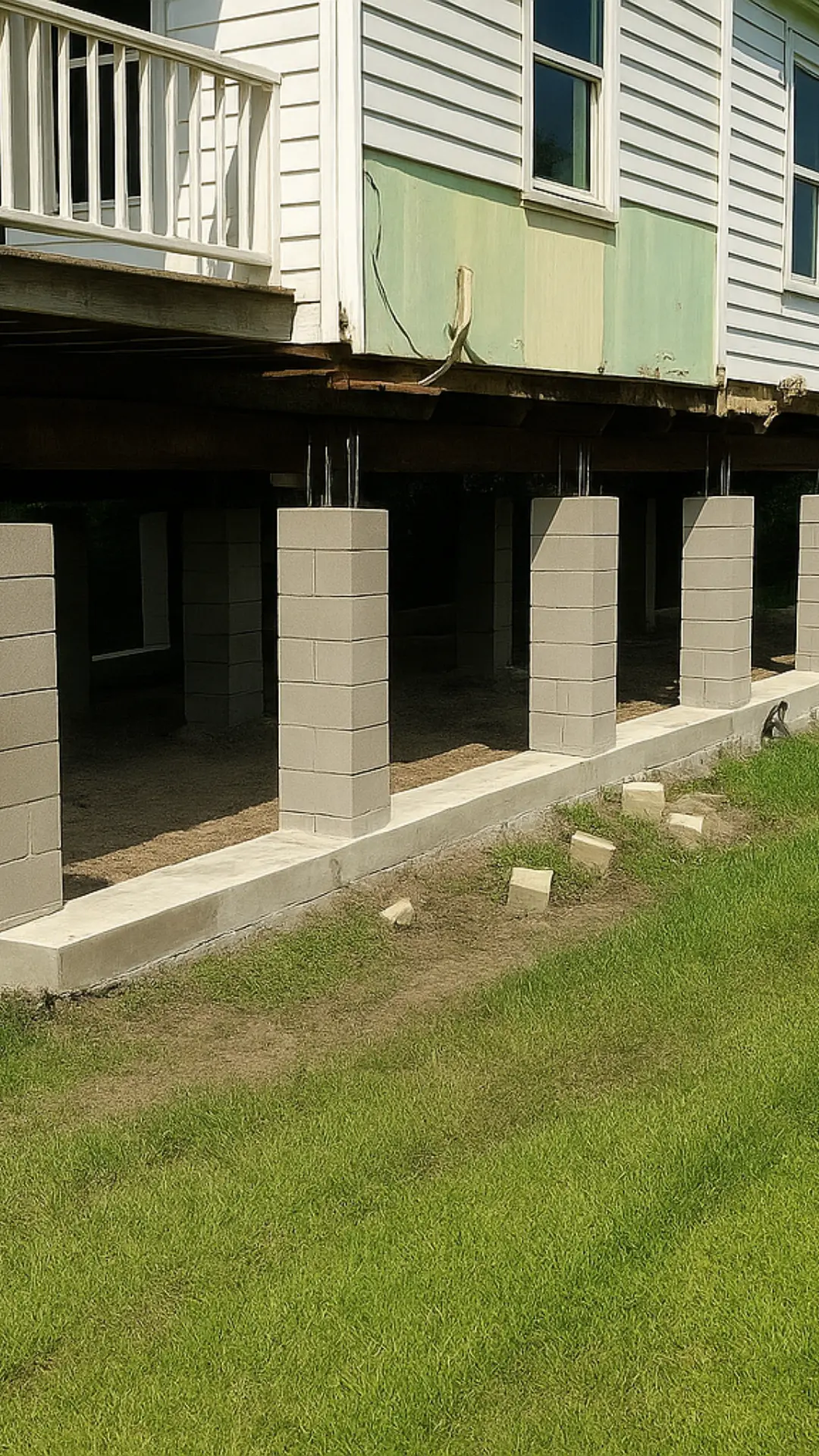
Homes with pier and beam foundations face unique structural challenges including wood pier rot from moisture exposure, concrete pier settlement into unstable soil, inadequate pier spacing creating excessive beam spans, and deteriorated support beams losing load-bearing capacity. These problems demand specialized pier and beam foundation repair Pearland services addressing both pier replacement and comprehensive structural strengthening. For more information about pier and beam systems, read our detailed article on pier and beam foundation repair approaches.
Slab Foundation Failure
Slab foundations experience structural problems including widespread cracking from severe settlement, slab sections breaking and separating, undermining where soil erodes beneath slabs creating voids, and rebar corrosion compromising structural reinforcement. Major slab failures require extensive structural foundation repair potentially involving slab stabilization through piering systems, void filling, or in severe cases, complete slab replacement.
Foundation Upheaval
Upheaval occurs when expansive soils beneath foundation centers swell more than perimeter areas, creating dome-like foundation elevation. This condition, common with Pearland’s clay soils during wet periods, produces floor cracking, wall stress, and structural misalignment. Addressing upheaval through structural foundation repair often requires moisture control, soil treatment, and foundation releveling to restore proper elevation and prevent recurring problems.
Signs You Need Structural Foundation Repair
Recognizing symptoms indicating structural foundation repair needs helps homeowners act before damage worsens. Interior warning signs include diagonal cracks from door or window corners suggesting differential settlement, horizontal cracks in drywall indicating wall movement, doors and windows sticking or refusing to close properly, floors with noticeable slopes or bouncing in areas previously solid, gaps between walls and ceilings or floors, and crown molding or baseboards separating from walls. Multiple simultaneous symptoms strongly suggest structural foundation repair needs.
Exterior indicators include visible foundation cracks wider than 1/4 inch, foundation walls showing bowing or leaning, chimneys separating or leaning away from houses, brick veneer displaying stair-step cracks, gaps between foundations and structures, and visible foundation displacement or settling. Any exterior symptoms warrant professional structural foundation repair evaluation as exterior damage often indicates advanced problems.
Foundation problems rarely stabilize spontaneously. Cracks widen, settlement accelerates, and structural stress compounds over time. Homeowners noticing damage progression cracks extending, slopes increasing, or new symptoms appearing should schedule immediate structural foundation repair consultations. Early intervention prevents minor problems from becoming major structural failures requiring far more extensive corrections.
Structural Foundation Repair Methods
Professional structural foundation repair employs various techniques addressing specific problem types:
Steel Pier Systems
Steel pier systems represent the most common structural foundation repair method for settlement and instability. Push piers involve hydraulically driving steel pier sections through unstable soil to bedrock or dense load-bearing strata using the structure’s weight as driving force. Once reaching adequate depth, hydraulic rams transfer building loads from shallow unstable footings to deep pier supports, permanently stabilizing structures and often lifting foundations to restore proper elevations. For detailed information about push pier systems, read our comprehensive push pier foundation repair guide.
Helical piers utilize screw-like steel shafts mechanically rotated into soil, with helical blades pulling piers downward while providing bearing capacity. Helical piers work excellently for lighter structures, situations with shallow bedrock, or applications requiring immediate loading without hydraulic driving.
Slab Jacking and Foundation Leveling
Slab jacking, also called mudjacking or foam injection, raises settled concrete slabs by pumping material beneath surfaces creating hydraulic lift. Traditional mudjacking uses cement-based slurry, while modern polyurethane foam injection offers lighter material, faster curing, and superior void-filling. For comprehensive foundation leveling combining stabilization and elevation restoration, professional house leveling service Pearland specialists coordinate piering systems with slab jacking for optimal results.
Wall Stabilization Systems
Bowing or leaning foundation walls demand structural foundation repair through reinforcement systems. Carbon fiber reinforcement involves applying high-strength carbon fiber fabric or straps to wall surfaces using epoxy adhesives, creating tensile reinforcement preventing further bowing. Steel I-beams installed vertically against walls and anchored to floors and structural members provide rigid bracing stopping wall movement.
Drainage Correction Systems
While not structural repairs themselves, drainage improvements prove essential for preventing future structural foundation repair needs. Proper drainage eliminates hydrostatic pressure causing lateral wall stress, prevents soil saturation producing settlement, controls expansive soil moisture minimizing heaving, and protects structural components from moisture damage. Comprehensive foundation repair Pearland programs combine structural repairs with drainage solutions addressing both existing damage and underlying causes.
The Structural Foundation Repair Process
Professional structural foundation repair follows systematic procedures ensuring permanent solutions. The process begins with comprehensive inspection evaluating damage extent, settlement patterns, structural implications, and repair requirements. Serious structural problems demand licensed engineering analysis. Structural engineers calculate building loads, design repair systems meeting capacity requirements, specify materials and installation procedures, and provide sealed engineering plans ensuring repairs meet building codes and safety standards. The U.S. Geological Survey provides soil data informing engineering decisions for foundation design in various geographic areas.
Understanding soil conditions proves critical for effective structural foundation repair. Soil testing reveals composition, bearing capacity, expansiveness, moisture content, and other characteristics affecting foundation performance and repair approach selection. Engineers and contractors develop detailed repair plans specifying pier types, quantities, and locations, wall reinforcement systems and configurations, drainage improvements addressing moisture problems, expected foundation lift and final elevations, project timeline and sequencing, and cost estimates with payment terms. Quality structural foundation repair proposals provide comprehensive information enabling informed decision-making.
Cost of Structural Foundation Repair
Understanding structural foundation repair costs helps homeowners budget appropriately. Structural foundation repair costs vary widely based on damage severity, required methods, and project scope. Minor structural foundation repair addressing limited areas might cost $3,000-$7,000. Moderate repairs involving multiple piers and some wall reinforcement typically run $7,000-$15,000. Extensive structural foundation repair for severely damaged homes can exceed $20,000-$40,000 or more. While substantial, these investments prove far less than home replacement costs or losses from catastrophic structural failure.
While structural foundation repair requires significant investment, costs pale compared to losses from neglected problems. Foundation failure destroys property values, prevents home sales, creates safety hazards exposing owners to liability, and eventually necessitates even more expensive emergency repairs or complete home demolition. Timely structural foundation repair protects property values, maintains habitability, prevents progressive damage, and provides peace of mind impossible to quantify financially.
Why Pearland Homes Need Structural Foundation Repair
Pearland’s unique conditions create frequent structural foundation repair needs. Pearland sits atop highly expansive clay soils that dramatically swell when saturated and shrink when dry. This constant expansion-contraction cycle stresses foundations year after year, eventually causing structural damage requiring professional structural foundation repair. Understanding local soil behavior proves essential for effective repairs and prevention strategies.
Pearland experiences substantial rainfall variability from drought periods causing severe soil shrinkage to heavy precipitation events saturating soils. These moisture extremes drive the expansion-contraction cycles stressing foundations. Seasonal patterns create predictable stress cycles that, over decades, necessitate structural foundation repair for many homes.
Choosing a Structural Foundation Repair Contractor
Selecting qualified contractors ensures successful outcomes. Verify contractors hold appropriate state licenses, bonding protecting clients financially, comprehensive liability and workers compensation insurance, and documented experience with structural foundation repair not just general foundation work. Structural foundation repair demands specialized expertise and equipment general contractors typically lack.
Professional structural foundation repair requires engineering analysis and design. Contractors should employ licensed structural engineers or work with independent engineering firms providing sealed plans. According to the International Code Council, avoid contractors offering structural foundation repair without proper engineering documentation such work likely violates building codes and may prove ineffective or dangerous.
Preventing Future Structural Foundation Damage
Proactive maintenance minimizes future structural foundation repair needs. Proper drainage proves essential maintain functional gutters and downspouts, ensure grading slopes away from foundations, install drainage systems where water accumulates, and address standing water promptly. Manage soil moisture during droughts through strategic watering maintaining relatively consistent conditions. Schedule regular inspections catching minor problems before they require extensive structural foundation repair. Address plumbing leaks immediately preventing soil saturation beneath foundations.
Conclusion: Protect Your Home Through Professional Structural Foundation Repair
Structural foundation repair represents critical investment protecting your home’s integrity, your family’s safety, and your property’s value. Unlike cosmetic concerns that merely affect appearance, structural problems threaten your home’s fundamental soundness problems that worsen inevitably without professional intervention.
For Pearland homeowners facing challenging soil conditions and climate patterns that stress foundations relentlessly, understanding structural foundation repair options, recognizing warning signs, and acting promptly when problems arise proves essential. The relatively manageable costs of early structural foundation repair pale compared to catastrophic failure expenses or losses from neglected deterioration.
Don’t gamble with your home’s structural integrity or your family’s safety. If you’ve noticed concerning symptoms or simply want peace of mind about your foundation’s condition, contact qualified structural foundation repair specialists who understand Pearland’s unique challenges. Professional assessment costs little, provides invaluable information, and often reveals problems still manageable through reasonable structural foundation repair interventions.
Your home deserves the stability and protection that only professional structural foundation repair provides schedule your evaluation today and ensure your foundation continues supporting your home safely for decades to come.
FAQs (Frequently Asked Questions)
1. What is structural foundation repair?
Structural foundation repair refers to the process of addressing foundation issues that affect a building’s stability. These repairs might involve stabilizing a sinking foundation, filling cracks, or addressing soil issues beneath the foundation. Methods include pier and beam repairs, slab jacking, and the use of helical piers to stabilize or lift a foundation back to its original level. This process ensures the structural integrity of the building is maintained.
2. How much does it cost to fix a structural issue?
The cost of fixing a structural issue varies depending on the severity of the damage, the repair method, and the size of the property. Minor repairs might range from $500 to $2,000, while extensive repairs could cost $5,000 to $15,000 or more. Factors influencing the cost include whether the repair is related to the foundation, framing, or other structural elements, as well as the materials and labor required.
3. What is the average cost of fixing a foundation?
On average, foundation repair can cost between $3,000 and $7,000, though this varies greatly depending on factors like the type of foundation, extent of damage, and location. For larger repairs involving the replacement of support piers or soil stabilization, the cost can exceed $10,000. It’s important to get an accurate estimate after a professional assessment.
4. Do you need a structural engineer for foundation repair?
While not always necessary, a structural engineer is recommended for more complex foundation problems. They can assess the severity of damage, recommend appropriate repair methods, and provide the necessary engineering reports. For issues like major settling or significant cracks, having an engineer’s report ensures repairs are done according to safety standards.
5. Can structural damage be repaired?
Yes, most structural damage, including foundation issues, can be repaired. The repair methods will depend on the type of damage. For example, settling foundations can often be stabilized with helical piers or slabjacking, while cracked walls may be reinforced with carbon fiber straps. Early intervention is key to preventing further damage and ensuring the stability of the structure.
6. What is the most expensive thing to repair in a house?
Foundation repairs are generally the most expensive structural repairs in a house. The cost can be high due to the need for specialized equipment, materials, and labor. Depending on the severity of the issue, foundation repair costs can range from a few thousand dollars to tens of thousands, especially if the foundation needs to be raised or stabilized with complex methods like helical piers.
7. Is foundation repair considered structural?
Yes, foundation repair is considered a structural repair. The foundation is a critical part of a home’s structure as it supports the entire weight of the building. If the foundation is compromised, it can lead to widespread structural issues throughout the house, including shifting walls, sagging floors, and uneven doors and windows. Therefore, any repair to the foundation is directly related to maintaining the structure’s integrity.