Foundation settlement threatens structural integrity, causing cracked walls, uneven floors, and compromised safety. When foundations sink into unstable soil, push pier foundation repair offers permanent stabilization by transferring structural loads to deep, competent soil layers or bedrock. Unlike temporary solutions that merely address symptoms, push pier foundation repair resolves underlying settlement causes while often enabling foundation lifting to restore proper elevations.
This proven engineering solution has protected countless homes from progressive foundation damage, delivering lasting stability backed by comprehensive warranties. Understanding how push pier systems work, when they’re appropriate, and what the installation process involves empowers property owners to make informed decisions protecting their most valuable investment. This comprehensive guide examines everything you need to know about push pier foundation repair, from basic principles to installation procedures and long-term benefits.
What Is Push Pier Foundation Repair?
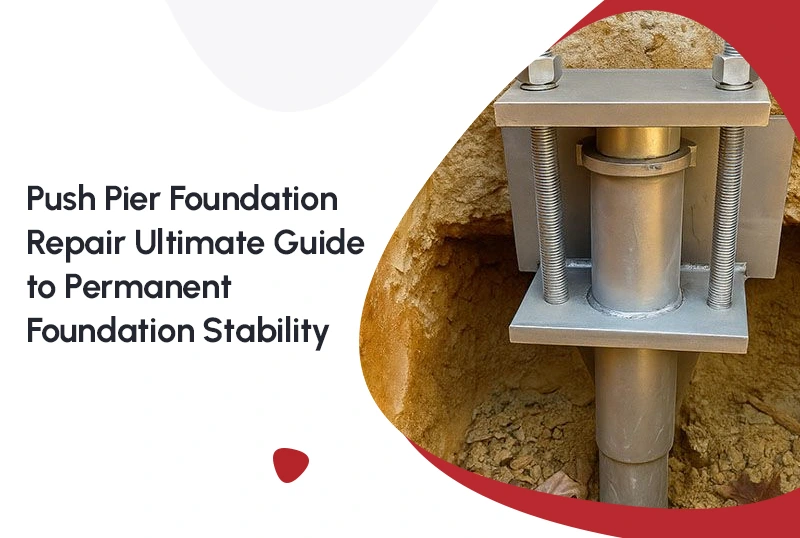
Push pier foundation repair constitutes an engineered foundation stabilization system using hydraulically-driven steel piers extending through unstable soil to bedrock or load-bearing strata. These deep foundation elements permanently support structures, preventing further settlement while potentially lifting foundations to original positions.
How Push Pier Systems Work
The push pier foundation repair process involves hydraulically driving steel pier sections through soil using the structure’s own weight as resistance. Contractors install piers beneath foundation footings at strategic locations, advancing them section-by-section until reaching refusal at bedrock or extremely dense soil layers. Once piers achieve adequate depth and capacity, hydraulic rams transfer building loads from shallow, unstable foundations to deep pier supports. This load transfer stabilizes structures immediately, halting settlement. According to the U.S. Department of Housing and Urban Development, deep foundation systems like push piers provide reliable long-term stabilization for settled structures when properly engineered and installed.
When Push Pier Foundation Repair Becomes Necessary
Push pier foundation repair addresses foundation settlement from expansive soils, soil consolidation, poor compaction, erosion beneath footings, and inadequate original foundation depth. Property owners notice settlement through cracked interior and exterior walls, doors and windows that stick or won’t close, sloping floors, gaps between walls and ceilings or floors, and separating trim or moldings. These symptoms indicate foundations have moved from original positions, requiring stabilization preventing progressive damage. Professional foundation repair Pearland services provide expert assessment determining whether push piers offer appropriate solutions.
Understanding various foundation problems helps property owners recognize when professional evaluation becomes necessary—for more information, read our comprehensive article on Concrete Foundation Crack Repair.
The Push Pier Foundation Repair Installation Process
Professional push pier foundation repair follows systematic engineering procedures ensuring permanent stabilization:
Initial Assessment and Engineering
Every push pier foundation repair project begins with comprehensive structural evaluation. Licensed engineers conduct elevation surveys mapping foundation positions, identify settlement patterns and magnitudes, assess soil conditions affecting pier depth requirements, calculate structural loads determining pier quantities and capacities, and design pier layouts ensuring adequate support distribution. This engineering phase proves critical—improper assessment leads to inadequate repairs or unnecessary expense. The American Society of Civil Engineers establishes standards governing foundation repair engineering, ensuring designs meet structural safety requirements.
Excavation and Foundation Exposure
Contractors excavate beside foundations at designated pier locations, exposing footings where piers will attach. Excavations typically measure 3-4 feet square and extend below footing depth. This work proceeds carefully avoiding undermining adjacent foundation sections. Proper excavation provides access for equipment while maintaining structural stability during push pier foundation repair installation.
Pier Driving to Bearing Strata
The core of push pier foundation repair involves hydraulically driving steel pier sections through soil to competent bearing layers. Contractors install foundation brackets beneath existing footings, then position initial pier sections in drive equipment. Hydraulic rams push piers downward using foundation weight as resistance—essentially the building pushes piers into the ground. As piers advance, contractors add sections sequentially, continuing until piers reach refusal at bedrock or extremely dense soil. This driving continues until achieving specified capacities verified through hydraulic pressure readings. Pier depths vary from 15 feet to 60+ feet depending on soil conditions and bearing layer depths.
Hydraulic Lifting and Foundation Recovery
Once piers reach adequate depths, push pier foundation repair proceeds to the lifting phase. Contractors position synchronized hydraulic rams at all pier locations, gradually applying upward pressure. This controlled lifting process raises foundations incrementally, typically advancing 1/8 to 1/4 inch per cycle while monitoring structural response. Many foundations lift several inches, closing cracks and leveling floors. However, contractors prioritize stabilization over maximum lift—forcing excessive movement risks additional structural damage. The goal involves achieving maximum safe recovery while establishing permanent support. Properties with specialized foundation configurations may require customized approaches—professional pier and beam foundation repair Pearland services adapt techniques for various foundation types.
Load Transfer and Permanent Support
After achieving desired elevation, contractors lock piers in position, permanently transferring structural loads from unstable shallow footings to deep pier supports. This load transfer represents the fundamental purpose of push pier foundation repair—ensuring foundations bear on stable soil eliminating future settlement. Contractors backfill excavations, compact soil properly, and restore landscaping. The installation typically completes within 1-3 days for average homes, allowing rapid return to normal occupancy.
Benefits of Push Pier Foundation Repair
Push pier foundation repair delivers multiple advantages over alternative foundation stabilization methods:
Permanent Foundation Stabilization
Unlike surface treatments addressing symptoms, push pier foundation repair eliminates settlement causes by transferring loads to stable deep soils. Once installed, piers provide permanent support unaffected by soil moisture changes, seasonal movement, or surface soil conditions. This permanent stabilization protects structures for their remaining service lives, typically warranted for 20-30 years or more. The peace of mind from knowing foundations rest on bedrock rather than unstable clay proves invaluable for property owners.
Foundation Lifting Capability
Beyond stabilization, push pier foundation repair often restores foundations to original elevations, closing cracks, leveling floors, and realigning doors and windows. While some settlement damage proves irreversible, lifting typically recovers substantial elevation, significantly improving structural conditions. This restoration capability distinguishes push piers from methods merely preventing additional settlement without addressing existing damage.
Understanding comprehensive leveling solutions helps property owners appreciate repair possibilities—for more information, read our detailed article on House Leveling Service.
Minimal Property Disruption
Push pier foundation repair installations proceed from outside structures, requiring no interior access or demolition. Homeowners typically remain in residences throughout projects with minimal lifestyle disruption. Excavations remain small and localized, limiting landscape damage. Most installations complete within days rather than weeks, quickly restoring stability and allowing life to return to normal. This convenience proves particularly valuable for occupied homes where extensive interior work would prove highly disruptive.
Comprehensive Warranties
Reputable contractors provide extensive warranties covering push pier foundation repair installations, typically spanning 20-30 years or lifetime coverage. These warranties protect property owners financially while demonstrating contractor confidence in repair quality. Transferable warranties enhance property values and facilitate future sales by reassuring potential buyers that foundation issues have received professional, warranted solutions.
Push Pier Foundation Repair vs. Other Methods
Comparing push pier foundation repair with alternative systems helps property owners select optimal solutions:
Push Piers vs. Helical Piers
Push pier foundation repair uses hydraulic driving force advancing smooth steel shafts to bearing layers, while helical piers mechanically screw into soil using spiral blades. Push piers excel for heavy structures, deep bedrock applications, and maximum lifting capacity. The International Code Council recognizes both systems as viable deep foundation solutions when properly engineered. Push piers typically cost more but provide superior capacity for substantial structures or severe settlement. Helical piers offer advantages for lighter buildings, shallow bearing layers, or tight access conditions. Professional engineers determine which system best suits specific situations.
Push Piers vs. Drilled Concrete Piers
Drilled concrete piers (pressed pilings) involve excavating deep holes, installing steel reinforcement, and filling with concrete. While providing maximum load capacity, drilled piers require extensive excavation, generate significant disruption, and need concrete curing time before loading. Push pier foundation repair installs faster, causes less disruption, and immediately supports structures without curing delays. For most residential applications, push piers deliver adequate capacity with superior convenience and economics compared to drilled concrete alternatives.
When Push Piers Represent the Best Choice
Push pier foundation repair proves ideal for active settlement requiring stabilization and lifting, heavy structures demanding high-capacity support, deep bedrock or bearing layer conditions, situations prioritizing rapid installation with minimal disruption, and properties where comprehensive warranties provide important protection. These systems have become industry standards for residential foundation repair due to their proven performance, reliability, and versatility across diverse soil conditions.
Cost Factors for Push Pier Foundation Repair
Understanding variables affecting push pier foundation repair costs helps property owners budget appropriately:
Number of piers required
More piers increase costs proportionally. Typical residential projects require 6-12 piers, though larger homes or severe settlement may need 15-20+ piers. Engineers calculate pier quantities based on settlement patterns and structural loads.
Depth to bearing strata
Deeper bedrock requires more pier sections, increasing material and labor costs. Push pier foundation repair in areas with bedrock at 20 feet costs significantly less than locations where bedrock lies at 50+ feet depth.
Accessibility and site conditions
Difficult access, landscaping obstacles, underground utilities, or limited working space increase labor requirements and project duration. Clear access paths and favorable conditions enable more efficient installations reducing costs.
Home size and structural complexity
Larger, heavier structures require more piers with higher capacities. Multi-story homes, brick veneer construction, or complex floor plans increase pier requirements compared to simple single-story structures.
Understanding comprehensive structural repair considerations helps property owners appreciate project scope—for more information, read our article on Home Structure Repair.
Signs You Need Push Pier Foundation Repair
Recognizing settlement symptoms enables timely push pier foundation repair before damage worsens:
Interior indicators include cracks in walls, especially diagonal cracks from corners of doors and windows, cracks in tile floors or countertops, sloping or uneven floors noticeable when walking, doors and windows sticking or failing to close properly, gaps between walls and ceilings or floors, and separating crown molding or baseboards. These symptoms indicate foundations have moved, potentially requiring push pier foundation repair.
Exterior warning signs encompass visible foundation cracks wider than 1/4 inch, bowing or leaning foundation walls, separating chimneys pulling away from structures, cracks in brick veneer in stair-step patterns, and gaps between siding and foundations. Any of these symptoms warrant professional evaluation determining whether push pier installation becomes necessary.
Progressive damage – Settlement rarely stops on its own. Cracks widen, floors slope more severely, and structural stress increases over time. Early intervention through professional assessment prevents minor problems from escalating into major structural failures requiring more extensive repairs.
Selecting a Push Pier Foundation Repair Contractor
Choosing qualified contractors ensures successful push pier foundation repair outcomes:
Required qualifications
Verify contractors hold appropriate state licenses, bonding, and comprehensive insurance. Push pier foundation repair requires specialized expertise and equipment—confirm specific experience with pier installations rather than just general foundation work.
Engineering capabilities
Professional engineering proves essential for proper pier design. Contractors should employ licensed structural engineers or work with independent engineering firms providing sealed plans and specifications. Avoid contractors offering installations without engineering documentation.
Warranty coverage
Review warranty terms carefully. Comprehensive warranties covering materials, workmanship, and performance for 20+ years demonstrate contractor confidence in repair quality. Transferable warranties add value should you sell your property.
References and track record
Request references from recent similar projects. Contact previous clients assessing satisfaction with work quality, professionalism, and long-term performance. Established contractors with proven track records provide greater assurance than new companies lacking demonstrated experience.
Conclusion: Investing in Permanent Foundation Stability
Push pier foundation repair represents proven engineering solutions delivering permanent stabilization for settled foundations. Unlike temporary fixes addressing only symptoms, push pier foundation repair eliminates settlement causes by transferring structural loads to deep, stable bearing layers. This fundamental approach ensures foundations rest on competent support immune to surface soil conditions causing original problems.
The comprehensive benefits—permanent stabilization, potential foundation lifting, minimal disruption, and extensive warranties—make push pier foundation repair the preferred solution for most foundation settlement situations. While initial costs appear substantial, the long-term value of permanent repairs, prevented progressive damage, and protected property values justifies the investment. Properties receiving professional push pier foundation repair enjoy structural stability and peace of mind for decades.
Don’t delay addressing foundation settlement—problems worsen over time, increasing eventual repair costs while risking serious structural damage. Contact qualified push pier foundation repair contractors who can evaluate your foundation, explain pier systems, and provide detailed proposals outlining solutions, costs, and timelines. Your home’s structural integrity depends on stable foundations—invest in professional push pier installation ensuring lasting protection for your most valuable asset.
FAQs (Frequently Asked Questions)
1. How much does a push pier system cost?
The cost of a push pier system can vary depending on factors like the extent of foundation issues, the size of your home, and your location. On average, push pier systems typically range from $1,000 to $3,000 per pier. For a typical residential foundation, the overall cost can range from $5,000 to $12,000. However, these costs may increase if the issues are more extensive or require additional work.
2. How long do push piers last?
Push piers are designed to last a lifetime when installed correctly. They are made of durable steel and are typically resistant to corrosion, making them a long-lasting solution for foundation stabilization. As long as they are properly installed and the soil conditions remain stable, push piers can provide permanent support to your foundation.
3. What are foundation push piers?
Foundation push piers are steel shafts that are driven deep into stable soil or bedrock beneath the foundation. They are used to lift and stabilize a settling foundation. The piers are installed from the exterior of the home and work by transferring the load of the foundation to deeper, more stable soil layers. Push piers are ideal for foundation repair, especially in areas with expansive soils.
4. Are push piers permanent?
Yes, push piers are permanent when installed correctly. They provide long-term support by transferring the load of your foundation to more stable soil layers. Once they are set into place, they help prevent further movement of the foundation, ensuring that the structure remains stable over time.
5. What is the 20/30/40 rule in concrete?
The 20/30/40 rule is a guideline used in the concrete industry that refers to the approximate amount of weight per square foot that various concrete slabs can bear based on their thickness. This rule helps professionals assess whether a slab is suitable for the intended load. For example:
- 20 pounds per square foot: Light concrete
- 30 pounds per square foot: Standard concrete for residential use
- 40 pounds per square foot: Heavy concrete slabs used in commercial or industrial applications.
6. What is the most expensive foundation repair?
The most expensive foundation repairs often involve major structural issues, such as replacing the entire foundation or performing deep foundation work like helical or pressed pilings. These repairs can cost anywhere from $10,000 to $40,000 or more, depending on the severity of the problem, the size of the home, and the repair method used. Large-scale repairs typically require extensive excavation and heavy equipment, which increases costs.
7. How much does a push pier foundation cost?
The cost of installing a push pier foundation depends on several factors, including the number of piers required, the type of soil, and the accessibility of the property. On average, push pier installation costs range from $1,000 to $3,000 per pier, and the total cost for a typical home may fall between $5,0