
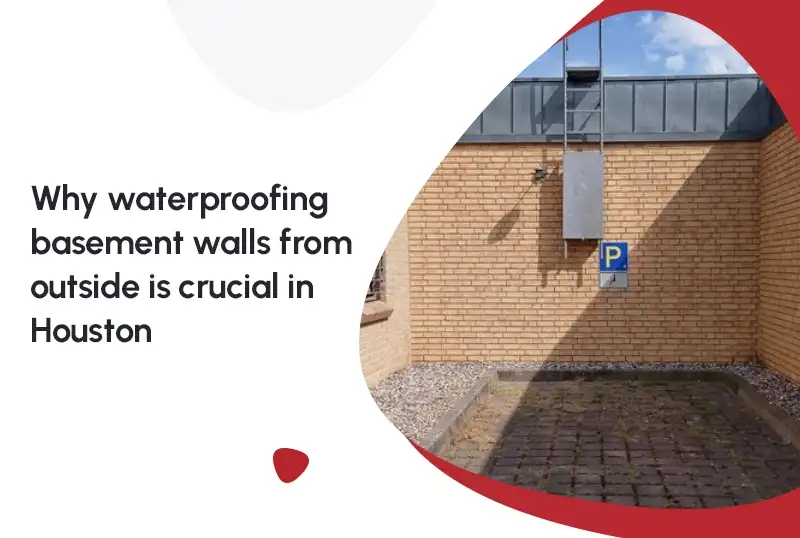
Exterior waterproofing protects below-grade walls by stopping water before it reaches the structure, rather than managing it after it gets inside. True basements are rare in Houston, but the same principles protect below-grade foundation walls, crawl spaces, and the soil-facing side of a foundation from the area's heavy rainfall and high water table. This guide explains why exterior waterproofing is the more durable approach and how it supports foundation stability.
The Importance of Exterior Foundation Waterproofing in Houston
Exterior waterproofing is one of the most effective methods for preventing water infiltration into your foundation, which can lead to severe structural damage. However, this issue is far more than just an aesthetic concern. Houston’s unique weather conditions, combined with the region’s expansive soil, make it even more essential to invest in this preventative measure. Let's take a closer look at why waterproofing your foundation walls from outside is so important in Houston.
1. Houston’s Unique Climate and High Humidity
Houston’s climate can be incredibly challenging for homeowners, especially when it comes to maintaining the structural integrity of the home. The combination of high humidity and significant rainfall creates the perfect conditions for water to seep into the home’s foundation. For many homes in Houston, particularly older ones or homes built on expansive soils, exterior foundation waterproofing is the first and most effective line of defense against water intrusion.
Over time, the moisture in the air and the ground can slowly break down a home's foundation, leading to cracks, leaks, and erosion. Exterior waterproofing helps prevent this by providing a barrier against moisture, keeping water from infiltrating the walls and seeping into the foundation.
2. Preventing Soil Movement and Erosion
Houston’s expansive clay soil is notorious for shifting and changing based on moisture levels. When it rains, the soil swells, creating additional pressure on the foundation walls. This constant movement can cause cracking, shifting, and settling. Once the foundation is compromised, it becomes easier for water to enter the crawl space.
This is where exterior foundation waterproofing plays a critical role. By preventing water from reaching the foundation, you eliminate one of the major contributors to soil movement. Additionally, exterior foundation waterproofing prevents erosion, ensuring that your home’s foundation stays intact despite the shifting soil beneath it. Without proper waterproofing, your home may face foundation issues, leading to expensive foundation repairs or worse, the need for house leveling Missouri City.
3. Protecting Against Foundation Damage and Cracks
The foundation of your home is its most important structural component, so ensuring that it remains intact is vital to your home's stability. Water infiltration can weaken concrete and cause cracks, which can lead to foundation problems over time. These cracks allow more water to seep through, which leads to a vicious cycle of water damage and further degradation of the foundation.
By exterior foundation waterproofing, you ensure that water doesn't enter your home’s foundation and cause further damage. This proactive measure can help prevent the need for costly repairs like foundation stabilization or pier and beam foundation repair which can easily run into thousands of dollars. In this way, exterior foundation waterproofing can save you from even more expensive problems down the road.
4. Mold, Mildew, and Health Hazards
Exterior waterproofing not only protects your home’s structure but also helps protect the health of those who live inside it. Damp crawl spaces and below-grade walls are notorious for harboring moisture, which creates the perfect breeding ground for mold and mildew. Mold spores, when inhaled, can lead to serious respiratory issues, allergic reactions, and other health problems.
In humid cities like Houston, where the air is already saturated with moisture, this problem is even more pronounced. Exterior waterproofing prevents water from entering the crawl space, stopping mold and mildew before it starts. By keeping these areas dry, you not only preserve the health of your home’s foundation but also the health of everyone inside.
5. Increased Property Value and Marketability
A dry, well-drained foundation is an attractive feature for potential homebuyers. Homes with well-maintained foundations free of water damage tend to sell for more and often have a faster turnover. When you waterproof foundation walls from outside, you are investing in your home’s future, ensuring that it remains structurally sound and attractive to buyers. A foundation that has been properly waterproofed is a sign of a well-maintained property, and potential buyers will appreciate the peace of mind that comes with it.
Common Methods for Exterior Foundation Waterproofing
Worried your foundation is already shifting?
Get a free, no-obligation inspection from a Houston foundation specialist — full written report, usually within 48 hours.
Schedule Free Inspection →Waterproofing your foundation walls from outside is not a one-size-fits-all solution. There are several methods available, and the choice of method depends on factors such as the severity of the problem, the condition of your foundation, and the climate. Below are some common methods used to waterproof foundation walls from outside.
1. Exterior Waterproofing Membranes
One of the most common and effective methods for exterior foundation waterproofing is the application of an exterior waterproofing membrane. This involves applying a thick, flexible material to the outside of the foundation walls. The membrane forms an impermeable barrier that prevents water from seeping into the structure. It is especially effective in areas where water pressure is high, such as near a river or in flood-prone regions like Houston.
These membranes can be applied to both concrete and masonry foundations, providing a long-lasting solution for homes in areas with high moisture levels. If you have cracks in your foundation walls, applying a waterproof membrane can seal them and keep water from entering your home.
2. Perimeter Drainage Systems
In conjunction with waterproofing membranes, a perimeter drainage system is essential for effective water management. A French drain, which is a trench filled with gravel and a perforated pipe, is commonly installed around the perimeter of the foundation. The pipe collects water and diverts it away from the foundation, ensuring that water does not pool around your foundation walls.
In Houston, where rainfall can be heavy, perimeter drainage is particularly important. The water that would otherwise collect and put pressure on your foundation is instead redirected, preventing it from seeping into the structure and causing damage.
3. Foundation Coatings
Foundation coatings are another popular method for exterior foundation waterproofing. These coatings are typically applied directly to the exterior of the foundation and dry to form a waterproof barrier. Some of these coatings also provide additional benefits, such as resistance to cracking and UV degradation. Coatings can be used in conjunction with drainage systems to provide comprehensive protection for your foundation.
4. Foundation Sealing and Crack Injection
For homes with existing foundation cracks, sealing the cracks with specialized fillers is an important step in waterproofing. Crack injection involves injecting a waterproof sealant into the cracks, which expands and bonds with the foundation material to block water from entering. This is a crucial step in the waterproofing process for older homes with foundation problems.
This method is often used in conjunction with other methods such as membrane application or perimeter drainage installation. When used properly, crack injection can prevent water from entering and causing further damage to your foundation.
5. Under-Slab Waterproofing
For homes with slab foundations, under-slab waterproofing is an important part of protecting against water infiltration. This method involves injecting a waterproofing solution beneath the slab to create a barrier between the soil and the foundation. It is particularly useful in areas where the water table is high, or where groundwater is an issue.
The Risks of Not Exterior Foundation Waterproofing
Neglecting to waterproof foundation walls from outside can lead to a host of problems that affect the long-term health of your home. The EPA emphasizes that controlling moisture is the key to preventing indoor mold growth and protecting home occupants. Some of the key risks include:
- Foundation Damage: Without waterproofing, water can seep into the foundation, causing cracks, erosion, and even complete failure in extreme cases.
- Increased Risk of Mold and Mildew: As moisture accumulates against the foundation, it creates the perfect environment for mold and mildew to thrive, leading to health risks.
- Structural Damage: Water infiltration weakens the structural integrity of your home, causing issues with the foundation, walls, and even the flooring above.
- Higher Repair Costs: Dealing with water damage later is much more expensive than investing in waterproofing upfront. If you wait too long, the cost of repairing your foundation or dealing with mold removal can escalate.
Conclusion
Exterior waterproofing is crucial for homeowners in Houston, where high humidity, heavy rainfall, and expansive soils present significant challenges. By investing in effective waterproofing methods, homeowners can prevent water infiltration, protect their home’s foundation, and create a healthier living environment.
Whether you’re dealing with a newly constructed home or an older property with an aging foundation, it’s never too early to take preventative measures. Exterior waterproofing ensures that your home remains structurally sound, dry, and safe from the damaging effects of water intrusion. Don’t wait for the water damage to take hold — act now to protect your investment and your home’s future.
FAQs
1. How do you waterproof a foundation wall from the outside?
Waterproofing a foundation wall from the outside involves excavating around the foundation to expose the soil-facing side of the wall. Once exposed, contractors typically apply a waterproofing membrane or bituminous coating to the wall to seal it. They may also install a drainage system (such as a French drain) at the base of the wall to channel water away from the foundation. After waterproofing, the trench is refilled, and a layer of gravel is added to ensure proper drainage.
2. How much does it cost to waterproof foundation walls from the outside?
The cost to waterproof foundation walls from the outside typically ranges from $3,000 to $10,000 or more, depending on factors like the size of the home, soil conditions, and the type of waterproofing materials used. The process is labor-intensive because it requires excavation around the home, which can increase the cost.
3. Is it better to waterproof from inside or outside?
Waterproofing from the outside is usually more effective because it prevents water from ever coming into contact with the foundation. It also addresses the root cause of moisture buildup—water entering the soil surrounding the foundation. Interior waterproofing methods, such as installing sump pumps or sealing cracks, can help manage water already inside but don’t address the underlying problem of water infiltrating from the outside.
4. Does exterior waterproofing actually work?
Yes. Exterior waterproofing is one of the most effective methods for preventing water intrusion. By addressing moisture at the source—before it reaches the foundation—exterior waterproofing provides long-term protection. It helps avoid mold, mildew, and structural damage that can result from water infiltration.